Wenzhou AIOU Optical Communication Co., Ltd.



Leave Your Message
-
 Get Your Quote
-
 Email
High-speed optical line terminals, service interfaces, and optical transceivers engineered for campus-wide fiber distribution.
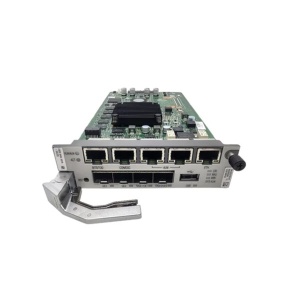
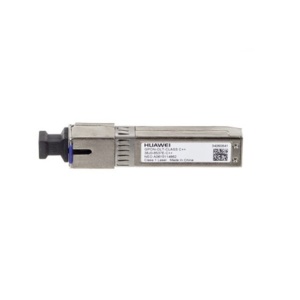
In contemporary educational institutions, research complexes, and enterprise smart parks, legacy copper-based Category 6/6A infrastructure is rapidly reaching its physical and operational limits. Bandwidth saturation, electro-magnetic interference (EMI), bulk cable ducting, and strict 90-meter horizontal channel constraints have catalyzed an industry-wide transition toward All-Optical Smart Campus Networks (POL/POLAN).
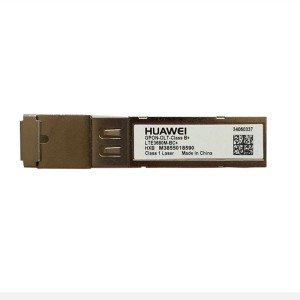
Within this architectural transformation, the SFP+ 10G 300m Multi-Mode Optical Module (operating at 850nm over duplex OM3/OM4 fiber) serves as the primary backbone and aggregation workhorse. Connecting high-density edge distribution switches, Wi-Fi 6/7 Optical Network Terminals (ONTs), and building aggregation nodes back to the central Optical Line Terminal (OLT) or core data center, this transceiver delivers deterministic microsecond latency and 10 Gbps bi-directional throughput.
• Wavelength: 850nm VCSEL Transmitter
• Fiber Type: Multi-Mode Fiber (MMF) 50/125μm OM3/OM4
• Reach: 300m on OM3; Up to 400m on OM4
• Form Factor: Hot-pluggable SFP+ MSA Compliant
• Interface: Duplex LC Optical Connector
• Diagnostics: Built-in Digital Diagnostic Monitoring (DDM/DOM)
Deploying 10G 850nm 300m optical transceivers addresses high-density bandwidth bottlenecks across intra-building and inter-building zones.
Modern pedagogy requires simultaneous 4K UHD video multicasting, uncompressed interactive whiteboard streaming, and immersive virtual reality lab interactions. 10G SFP+ modules ensure zero-frame-drop uplink from classroom distribution switches to the central campus media server cluster.
Next-generation enterprise Access Points feature 2.5GE, 5GE, and 10GE uplink ports. Aggregating traffic from dozens of dense APs across lecture halls and student dormitories necessitates dedicated 10G optical links spanning up to 300 meters without active mid-span repeaters.
Smart campuses utilize hundreds of AI facial recognition, perimeter detection, and thermal imaging cameras. Centralizing multi-channel high-bitrate video streams to edge AI inference servers relies on the high-bandwidth, noise-immune pipeline provided by 10G multi-mode fiber transceivers.
Academic computing, student information management systems (SIS), and cloud virtualization platforms inside campus data rooms require low-power, high-density Top-of-Rack (ToR) and End-of-Row (EoR) interconnections where 300m reach covers 99% of intra-facility routing.
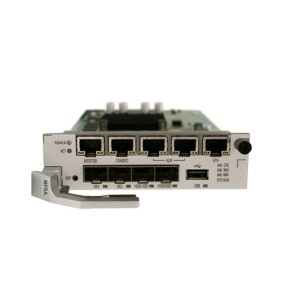
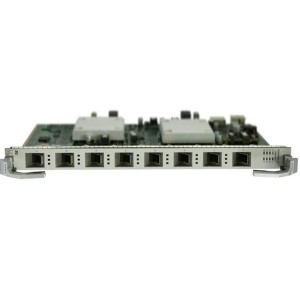
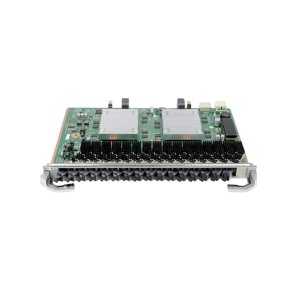
By integrating 10G optical modules directly with 10G GPON / XG-PON / XGS-PON OLT service boards, campuses achieve simplified two-tier architectures, reducing equipment room footprints, air conditioning consumption, and overall carbon emissions by over 40%.
Integrated Digital Diagnostic Monitoring (DDM/DOM) provides real-time telemetry on optical transmit/receive power, operating temperature, laser bias current, and supply voltage, enabling AI-driven network management to proactively flag fiber degradation before outages happen.
Understanding optical parameters, power budgets, and fiber dispersion is paramount for reliable campus optical design.
| Parameter / Feature | 10G SFP+ SR (300m Multi-Mode) | 10G SFP+ LR (10km Single-Mode) | 10GBASE-T (Copper RJ45) |
|---|---|---|---|
| Target Application | Intra-building / Floor Distribution / Data Center | Inter-building / Campus Metropolitan Backbone | Short-range Server Rack Patching |
| Nominal Wavelength / Media | 850nm VCSEL (OM3 / OM4 MMF) | 1310nm DFB Laser (G.652 SMF) | Category 6A / 7 Twisted Pair Copper |
| Max Reach Distance | 300m (OM3) / 400m (OM4) | 10,000m (10km) | 30m - 100m (heat/power limited) |
| Module Power Consumption | < 0.8W - 1.0W (Ultra-Low Heat) | < 1.2W - 1.5W | 2.5W - 3.5W (High Thermal Load) |
| Latency Profile | Sub-microsecond (< 0.1 μs) | Sub-microsecond (< 0.1 μs) | Higher latency (~1.5 to 2.5 μs PHY delay) |
| Immunity to EMI / RFI | Complete Galvanic & Optical Isolation | Complete Galvanic & Optical Isolation | Susceptible to ground loops & heavy machinery EMI |
| Total Cost of Ownership (TCO) | Lowest transceiving cost for <300m links | Higher transceiver cost; single-mode optics | High energy & cooling operational expense |
When provisioning 10G 300m SFP+ transceivers, selecting the appropriate multi-mode optical fiber is crucial for ensuring modal bandwidth margins. OM3 fiber offers an Effective Modal Bandwidth (EMB) of 2000 MHz·km at 850nm, comfortably supporting 10Gbps transmission up to 300 meters. For campuses anticipating future migrations to 25G, 40G, or 100G short-reach links, deploying OM4 fiber (4700 MHz·km EMB) extends the 10G link distance to 400 meters while establishing a seamless future-proof upgrade pathway without re-cabling.
Established in 2006, Wenzhou AIOU Optical Communication Co., Ltd. is a professional high-tech enterprise dedicated to the full industrial chain of optical network access solutions, covering research and development, manufacturing, sales, and after-sales service. We focus on delivering cutting-edge passive optical network (PON) products, including EPON, GPON, and XPON series, which are carefully tailored to meet the diverse needs of global customers in different regions and industries. With a firm commitment to independent innovation, we have built a strong R&D team composed of senior engineers with years of industry experience, holding multiple core technology patents and forming a comprehensive industrial chain, thus effectively serving various sectors such as operator networks, government and enterprise information systems, smart parks, and home broadband access.
Explore our carrier-grade OLT service boards, PON interfaces, and high-reliability SFP transceivers designed for high-density campus networking.