Wenzhou AIOU Optical Communication Co., Ltd.



Leave Your Message
-
 Get Your Quote
-
 Email
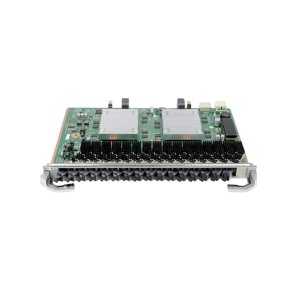
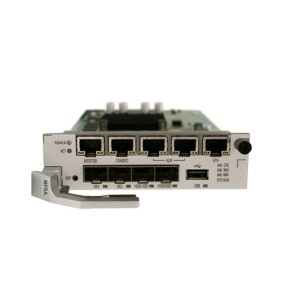
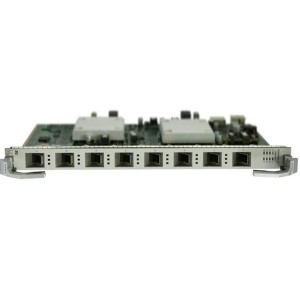
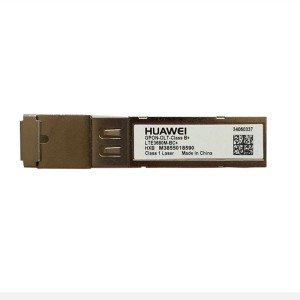
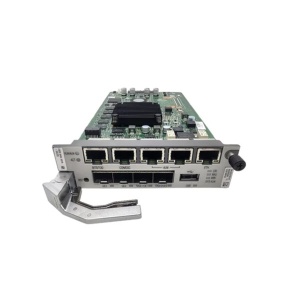
Explore our premium selection of 10G GPON/XG-PON OLT interface boards and transceivers, specifically engineered to support high-speed backhaul and seamless distribution in modern FTTR and Wi-Fi 6 network environments.
The global telecommunications landscape is witnessing an unprecedented transition from Fiber to the Home (FTTH) to Fiber to the Room (FTTR). While FTTH successfully delivers ultra-fast fiber optic broadband to the building's gateway, the internal distribution within large residences, smart villas, and commercial offices often relies on traditional copper cables or wireless repeaters. This creates a severe bottleneck, particularly when paired with high-density Gigabit Wi-Fi 6 access points that require massive throughput and ultra-low latency.
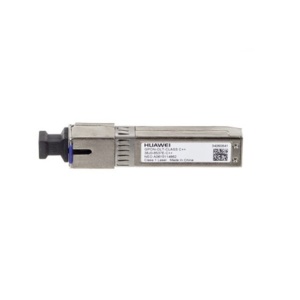
To bridge this gap, network architects are deploying optical fibers directly to individual rooms, utilizing the SFP Module 10g 300m as the primary physical layer interface. Operating at speeds up to 10 Gbps over multi-mode fiber with a reach of up to 300 meters, these transceivers offer the perfect balance of bandwidth, distance, and cost-efficiency. This architecture ensures that the backhaul connection of every Wi-Fi 6 router or Access Point (AP) is completely unconstrained, delivering true gigabit wireless coverage to every corner of the property.
Currently, major telecom operators and enterprise network providers worldwide are heavily investing in FTTR infrastructure. The commercial value proposition is clear: as smart home devices, 4K/8K video streaming, virtual reality (VR/AR), and cloud computing become mainstream, consumers and businesses demand consistent, high-performance connectivity. Traditional copper-based Ethernet cables (like Cat5e or Cat6) suffer from electromagnetic interference, signal degradation over distance, and physical bulkiness, making them less suitable for modern interior retrofitting. Optical fiber, combined with high-performance 10G transceivers, offers an immune, future-proof, and aesthetically clean alternative.
Wi-Fi 6 (802.11ax) introduces technologies like OFDMA (Orthogonal Frequency-Division Multiple Access) and MU-MIMO to handle multiple devices simultaneously. However, a Wi-Fi 6 AP is only as fast as its backhaul. If multiple users are downloading files, gaming, and video conferencing concurrently, a standard 1 Gbps backhaul link will saturate immediately. By utilizing a 10G SFP+ transceiver operating over a 300-meter multi-mode fiber span, network administrators can deliver a dedicated 10 Gbps pipeline to the local switch or master ONU, ensuring that the wireless network operates at peak theoretical speeds without packet loss or jitter.
The Sfp Module 10g 300m is a hot-pluggable optical transceiver designed for high-speed optical data communications. Operating over Multi-Mode Fiber (MMF), it typically uses an 850nm VCSEL laser transmitter and a PIN photodetector. Below is a detailed breakdown of how this technology integrates into FTTR Gigabit Wi-Fi 6 networks.
| Parameter | Specification / Feature | Importance in FTTR & Wi-Fi 6 |
|---|---|---|
| Data Rate | Up to 10.3125 Gbps (SFP+ Form Factor) | Prevents backhaul bottlenecks for multiple Wi-Fi 6 APs. |
| Wavelength | 850 nm (VCSEL Transmitter) | Cost-effective optical source optimized for short-range multi-mode fiber. |
| Transmission Distance | Up to 300m over OM3 MMF (400m over OM4 MMF) | Perfect coverage for smart villas, multi-story buildings, and campuses. |
| Fiber Type | Multi-Mode Fiber (MMF) | Simpler installation, lower transceiver cost, and high tolerance to bending. |
| Digital Diagnostics (DDM/DOM) | Real-time optical power, temperature, and voltage monitoring | Enables remote network maintenance and quick troubleshooting for operators. |
| Power Consumption | < 1.0 W typical | Low thermal footprint, crucial for compact home ONT/ONU designs. |
Fiber optic transmission minimizes propagation delay. When combined with the high schedule efficiency of Wi-Fi 6, latency-sensitive applications like online gaming, cloud VR, and live broadcasting achieve sub-millisecond response times, creating an unmatched user experience.
Unlike copper cables, optical fibers are completely immune to electromagnetic interference (EMI) and radio frequency interference (RFI). This ensures stable, error-free data transmission even when routed alongside electrical wiring in residential walls.
Laying optical fiber today guarantees compatibility with next-generation network standards such as Wi-Fi 7 (802.11be) and 25G/50G PON. Upgrading the network speed in the future only requires changing the SFP transceivers, not the cabling infrastructure.
The standard SFP+ form factor allows hot-plugging into OLT service boards, switches, and routers without powering down the system. This modularity simplifies network upgrades and maintenance cycles.
The integration of 10G 300m SFP modules with Wi-Fi 6 access points is transforming connectivity across various residential, commercial, and industrial settings. Below are the key scenarios where this architecture excels.
In large, multi-story residences, concrete walls and floors act as severe barriers to wireless signals. A single router in the living room cannot provide adequate coverage to bedrooms, study rooms, or basements. By deploying an FTTR network, a master ONT (Optical Network Terminal) is installed at the main fiber entry point. Using 10G 300m SFP modules, micro-optical fibers are routed to slave ONUs in each room. Each slave ONU acts as a Wi-Fi 6 access point, creating a unified mesh network with seamless roaming. Users can move from floor to floor without experiencing dropped video calls or disconnected gaming sessions.
Modern offices feature open layouts but high user density. Dozens of employees connect laptops, smartphones, and IoT devices to the corporate network simultaneously. With cloud-based collaboration tools (like Zoom, Microsoft Teams, and Google Workspace) requiring constant bandwidth, the office backhaul must be extremely robust. Connecting multiple Wi-Fi 6 ceiling APs to a central switch using 10G SFP+ transceivers ensures that the local wireless network can handle hundreds of concurrent gigabit sessions without bottlenecking at the physical layer.
Educational institutions are increasingly adopting interactive e-learning, VR classrooms, and online examinations. A digital classroom requires high bandwidth for student tablets and interactive displays. By linking school building switches with 10G 300m optical modules, campuses can guarantee that high-speed internet is distributed evenly across all classrooms, preventing network crashes during high-concurrency events like online exams.
In automated warehouses and smart factories, Automated Guided Vehicles (AGVs), robotic arms, and IoT sensors rely on continuous wireless communication. These environments are often filled with heavy machinery that generates significant electromagnetic noise, which degrades traditional copper Ethernet signals. By utilizing fiber optic cabling and 10G SFP modules to connect Wi-Fi 6 APs scattered across the factory floor, operators ensure a highly reliable, noise-immune wireless control network with zero packet loss.
Established in 2006, Wenzhou AIOU Optical Communication Co., Ltd. is a professional high-tech enterprise dedicated to the full industrial chain of optical network access solutions, covering research and development, manufacturing, sales, and after-sales service. We focus on delivering cutting-edge passive optical network (PON) products, including EPON, GPON, and XPON series, which are carefully tailored to meet the diverse needs of global customers in different regions and industries. With a firm commitment to independent innovation, we have built a strong R&D team composed of senior engineers with years of industry experience, holding multiple core technology patents and forming a comprehensive industrial chain, thus effectively serving various sectors such as operator networks, government and enterprise information systems, smart parks, and home broadband access.
Our complete product line covers OLT (Optical Line Terminal), ONU (Optical Network Unit), high-performance optical modules, and network switching equipment, supporting access rates ranging from 10/100M to 10G. These solutions are characterized by high performance, stable reliability, low latency, and easy deployment, perfectly aligning with customers’ demands for secure, stable, and high-speed communication networks. All our products have passed strict CE certification, as well as other international quality certifications, and are exported to more than 20 countries and regions across South America, Africa, Eastern Europe, Southeast Asia, and the Middle East, winning wide recognition from global partners for their superior quality and cost-effectiveness.
We operate a standardized 2,000-square-meter production zone equipped with advanced automated production and testing equipment, where we strictly adhere to ISO9001 quality management systems, CCC, and CE standards to ensure the consistency and reliability of each product. Our core mission is to exceed customer expectations by providing premium quality products, efficient and thoughtful after-sales services, and industry-leading technical support, continuously driving technological innovation and development in the global optical network infrastructure field.
Browse our comprehensive portfolio of high-speed OLT boards and transceivers, designed to bring Gigabit and 10-Gigabit optical connectivity to FTTR, FTTH, and enterprise networks worldwide.