Market Evolution: The Strategic Imperative for 10G 300m Multi-Mode Upgrades
The contemporary enterprise network landscape is undergoing a radical paradigm shift driven by data-intensive applications, private cloud virtualization, high-density Wi-Fi 6/7 access points, and distributed AI inferencing workloads. For decades, standard 1 Gigabit Ethernet (1GbE) backbones provided adequate bandwidth for routine corporate traffic. However, exponential data expansion has transformed legacy 1G uplinks into crippling systemic bottlenecks.
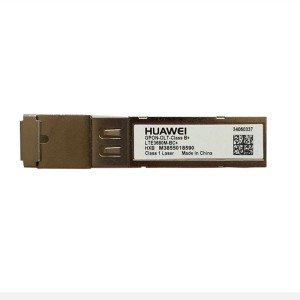
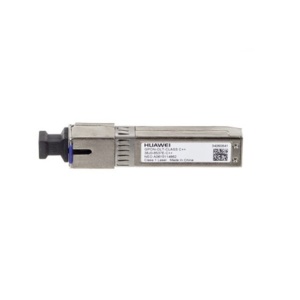
To overcome bandwidth saturation, network architects are broadly turning to the SFP Module 10G 300m (commonly designated under the IEEE 802.3ae standard as 10GBASE-SR). Operating at an 850nm optical wavelength over multi-mode fiber (MMF), this class of small form-factor pluggable plus (SFP+) optical transceivers has emerged as the definitive sweet spot for short-to-medium distance enterprise infrastructure upgrades.
Unlike single-mode long-reach optics (10GBASE-LR) which carry substantial transceiving laser costs, or active copper cables (DAC) that suffer from severe transmission loss past 5 to 7 meters, the 10G 300m SFP+ module balances ultra-low latency, modest power dissipation (under 1.0W), and economical OM3/OM4 fiber cabling infrastructure. Consequently, it represents the primary physical-layer engine powering enterprise campus distribution frames, Top-of-Rack (ToR) data center switching, and enterprise storage area networks (SAN).
Technical Architecture of 10GBASE-SR 850nm SFP+ Transceivers
Understanding the inner mechanics of the 10G 300m SFP module is critical for optimizing link budgets, dispersion penalties, and thermal dissipation inside dense network racks. The module integrates several key micro-optical components:
- 850nm VCSEL Transmitter: Utilizes Vertical-Cavity Surface-Emitting Laser (VCSEL) technology. VCSEL diodes emit a circular, low-divergence optical beam directly perpendicular to the wafer surface, allowing high-speed direct modulation up to 10.3125 Gbps with low drive currents and superior manufacturing yield compared to edge-emitting DFB lasers.
- PIN Photodetector Receiver: Incorporates a high-sensitivity Indium Gallium Arsenide (InGaAs) PIN diode paired with a transimpedance amplifier (TIA) to convert attenuated 850nm optical photons back into clean electrical pulse streams.
- Digital Optical Monitoring (DOM / DDM): Compliant with SFF-8472 industry standards, enabling real-time telemetry of operating temperature, supply voltage, laser bias current, transmitted optical power (Tx), and received optical power (Rx). This diagnostic capability allows enterprise IT administrators to proactively identify link degradation before full failure occurs.
- Standard Duplex LC Optical Interface: Employs universal LC latching connectors that ensure minimal insertion loss (<0.2dB) and high mechanical retention stability under continuous operational vibration.
Fiber Media Compatibility and Reach Dynamics: OM1 through OM5
The transmission distance achieved by an SFP Module 10G 300m is directly dictated by the modal dispersion characteristics of the underlying multi-mode optical core:
| Fiber Classification | Core / Cladding Diameter | Overfilled Launch Modal Bandwidth | Effective 10G Reach Distance |
|---|---|---|---|
| OM1 (Legacy) | 62.5 / 125 μm | 200 MHz·km | Up to 33 meters |
| OM2 (Standard) | 50 / 125 μm | 500 MHz·km | Up to 82 meters |
| OM3 (Laser-Optimized) | 50 / 125 μm (Aqua) | 2000 MHz·km | Up to 300 meters |
| OM4 (High-Bandwidth) | 50 / 125 μm (Erika Violet/Aqua) | 4700 MHz·km | Up to 400 meters |
| OM5 (Wideband MMF) | 50 / 125 μm (Lime Green) | 4700 MHz·km (SWDM) | Up to 400 meters |
When migrating an existing corporate facility, utilizing laser-optimized OM3 or OM4 multi-mode cabling allows enterprise architects to span multi-floor vertical risers, interconnect adjacent data closets, and bridge sprawling office wings without installing expensive single-mode fiber infrastructure.
Comprehensive Enterprise Use Cases & Deployment Topology
1. Data Center Top-of-Rack (ToR) and Middle-of-Row (MoR) Switching
Modern virtualization hosts running hypervisors (such as VMware ESXi, Nutanix, or Proxmox) aggregate dozens of virtual machines on a single compute node. Dual-port 10G PCIe Network Interface Cards (NICs) connected via 10G 300m multi-mode SFP+ transceivers to ToR distribution switches guarantee that inter-VM east-west traffic and live storage migrations (vMotion) occur with microsecond-level latency and zero packet queue congestion.
2. High-Performance Campus Backbone and Aggregation Consolidation
Enterprise campuses spread over multi-building corporate parks require robust aggregation layers. SFP 10G 300m modules facilitate resilient link aggregation groups (LACP / 802.3ad). By bundling multiple 10G SR links into 20Gbps or 40Gbps logical trunks, network administrators ensure total redundancy, automated failover, and massive headroom for simultaneous multi-gigabit video streaming, VoIP telephony, and enterprise resource planning (ERP) systems.
3. Converged Storage Networks: iSCSI, NFS, and NVMe-oF
Storage performance demands have transitioned from traditional mechanical spinning arrays to all-flash NVMe enterprise arrays. The 10GBASE-SR optical physical layer prevents the packet serialization delays that historically hampered 1GbE iSCSI implementations. By maintaining line-rate 10Gbps full-duplex transfers across 300m multimode runs, enterprise SAN storage clusters deliver continuous IOPS performance needed for intensive database clustering (Microsoft SQL, Oracle RAC, PostgreSQL).
Total Cost of Ownership (TCO): 10GBASE-SR vs. 10GBASE-LR vs. 10GBASE-T
Financial decision-makers evaluating enterprise refresh cycles must assess capital expenditure (CAPEX) alongside operational power and cooling overheads (OPEX). Below is an architectural comparison highlighting why 10G 300m Multi-Mode SFP+ remains the industry standard for inside-building networking:
- Thermal and Power Efficiency: A standard 10G 300m SFP+ optical transceiver consumes approximately 0.6W to 0.8W per port. In contrast, 10GBASE-T copper RJ45 transceivers consume 2.5W to 4.0W per port and generate severe heat dissipation within switch enclosures. In a 48-port switch configuration, 10GBASE-SR optics reduce switch power draw and cooling requirements by up to 75%.
- Electromagnetic Immunity: Optical fiber runs utilizing 10G 300m SFP modules are completely impervious to electromagnetic interference (EMI), radio frequency interference (RFI), and ground loops. This makes multi-mode fiber ideal for deploying across elevator shafts, factory production floors, and high-voltage electrical pathways where copper Cat6A cables experience packet degradation.
- Optics Acquisition Costs: Because 850nm VCSEL lasers are manufactured at monumental economies of scale compared to 1310nm DFB single-mode lasers, 10GBASE-SR transceivers cost roughly 40% to 60% less than equivalent 10GBASE-LR transceivers, delivering dramatic CAPEX savings on large-scale campus rollouts.
Migration Blueprint: Step-by-Step Enterprise 10G Upgrade
Executing an enterprise network transition from legacy 1Gbps to high-speed 10Gbps optical infrastructure requires a systematic migration workflow:
- Optical Fiber Audit: Inspect existing fiber patch panels with an Optical Time-Domain Reflectometer (OTDR) or visual fault locator (VFL). Confirm fiber core diameters (ensure 50/125μm OM3/OM4) and clean all LC bulkhead connectors with precision dry-cleaning pens.
- Optical Power Budget Verification: Calculate the link loss budget. The typical 10GBASE-SR power budget is 2.6 dB. With OM3 cable attenuation at ~3.0 dB/km at 850nm and connector insertion losses at ~0.25 dB per pair, ensure that the cumulative attenuation across the 300-meter run remains well within the transceiver's operational dynamic range.
- Switch Compatibility & EEPROM Verification: Deploy transceivers equipped with universal multi-vendor encoded EEPROM profiles. This guarantees hassle-free handshakes across heterogeneous switch environments (Cisco, Juniper, Arista, Huawei, Dell, Edgecore).
- Digital Diagnostic Monitoring (DDM) Baseline: Upon linking, poll the switch command line interface (CLI) to record baseline Tx/Rx power levels and temperature figures. Establish automated SNMP traps to alert system administrators should received optical power drift below standard thresholds.