Wenzhou AIOU Optical Communication Co., Ltd.



Leave Your Message
-
 Get Your Quote
-
 Email
Explore our high-performance 10G switching boards and SFP+ modules optimized for data center interconnects.
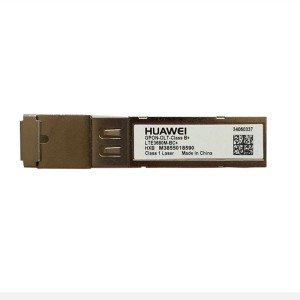
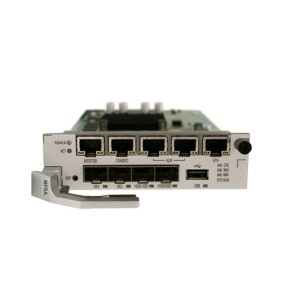
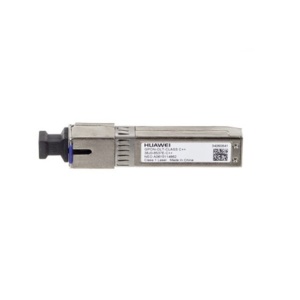
In the era of hyper-scale computing, cloud virtualization, and rapid data expansion, optical networks form the nervous system of modern data centers. Among the vast array of optical interconnect solutions, the SFP module 10G 300m remains a foundational pillar for short-reach, high-density networking. Specifically designed for multi-mode fiber (MMF) deployments, these transceivers operate predominantly at a nominal wavelength of 850nm, delivering highly reliable 10 Gigabit Ethernet connectivity over distances of up to 300 meters on OM3 optical fiber, and up to 400 meters on OM4 fiber.
Data center optical interface switching relies heavily on these SFP+ (Small Form-factor Pluggable Plus) modules to connect Top-of-Rack (ToR) switches to Leaf switches, and to bridge the gap between high-performance servers and storage area networks (SANs). While newer 40G, 100G, and 400G architectures are expanding within core networking layers, 10G SFP+ modules represent the most cost-effective, thermally stable, and energy-efficient solution for access-layer connections. They offer a perfect balance of bandwidth, reach, and capital expenditure (CAPEX) optimization.
The persistent demand for 10G 300m transceivers is driven by several operational realities in industrial and commercial data centers:
Utilizes Vertical-Cavity Surface-Emitting Laser (VCSEL) technology to deliver highly efficient, low-cost optical transmission over multi-mode fiber arrays.
Features real-time diagnostic capabilities, allowing network administrators to monitor transmitter power, receiver power, temperature, and supply voltage.
The industrial landscape of data center networking is undergoing a structural shift. As edge computing nodes proliferate and private enterprise clouds expand, the demand for reliable optical interface switching hardware has surged. The market is no longer dominated solely by massive hyperscale facilities; instead, regional data centers, colocation hubs, and enterprise server rooms represent a massive portion of global infrastructure spending.
Within these environments, the choice of optical modules directly influences the overall efficiency of the network fabric. The SFP module 10G 300m serves as the primary gateway for migrating legacy 1G networks to high-performance 10G optical networks. Because these modules are hot-pluggable, network operators can upgrade capacity incrementally without interrupting active services, providing unmatched operational flexibility.
Modern data centers have largely abandoned the traditional three-tier network design in favor of a two-tier Leaf-Spine architecture. This configuration ensures predictable, low-latency east-west traffic flow (traffic between servers). In a typical setup:
By leveraging 10G 300m transceivers, operators can span the entire physical footprint of a standard data center hall without signal degradation, avoiding the distance limitations of Direct Attach Copper (DAC) cables, which are typically capped at 7 meters for 10G speeds.
High-speed data retrieval is critical for database management, virtual machine hosting, and backup systems. Fiber Channel over Ethernet (FCoE) and iSCSI protocols utilize 10G SFP+ modules to connect storage controllers to SAN switches. The 300-meter reach ensures that storage arrays can be physically isolated in secure, dedicated zones of the data center while maintaining high-throughput connectivity to compute nodes.
In financial markets, microseconds translate directly into revenue. Financial data centers require interface switching components that minimize packet processing delays. The optical-to-electrical conversion in SFP+ transceivers is exceptionally fast, bypassing the latency-heavy line coding required by copper connections. Operating over OM4 fiber at 850nm, these modules facilitate rapid transaction execution and real-time market data dissemination.
Colocation providers host diverse hardware configurations for multiple tenants. The universal compatibility of SFP+ slots allows providers to offer flexible interconnect options. Tenants can easily deploy 10G 300m modules to connect their private cages to the colocation carrier's Meet-Me Room (MMR), ensuring secure, dedicated bandwidth up to the facility's physical boundaries.
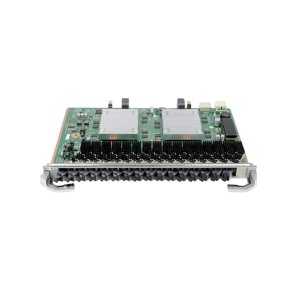
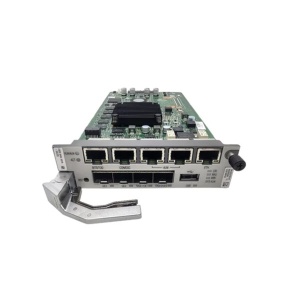
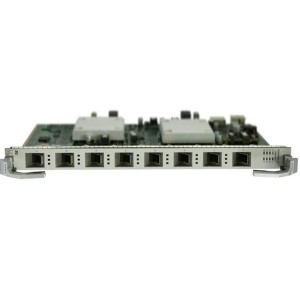
To ensure seamless integration with high-speed switching boards (such as the NXED, MPSG, or MPSA series), optical transceivers must adhere to strict IEEE and MSA (Multi-Source Agreement) standards. The 10GBASE-SR standard defines the parameters for 10G optical transmission over short distances. Below is an overview of the critical parameters that govern the performance of these modules:
As data centers transition toward 400G and 800G core speeds, the role of the 10G interface is evolving. Rather than disappearing, 10G SFP+ modules are increasingly deployed in edge computing nodes, IoT gateways, and industrial automation networks where cost, power consumption, and simplicity are paramount. Furthermore, optical switching technologies are moving toward silicon photonics and co-packaged optics (CPO) to reduce parasitic capacitance and optical losses. However, for regional nodes and enterprise network access layers, the classic pluggable SFP+ module remains the undisputed standard due to its ease of replacement and mature manufacturing ecosystem.
Wenzhou AIOU Optical Communication Co., Ltd. — Your trusted partner in optical network access solutions.
Established in 2006, Wenzhou AIOU Optical Communication Co., Ltd. is a professional high-tech enterprise dedicated to the full industrial chain of optical network access solutions, covering research and development, manufacturing, sales, and after-sales service. We focus on delivering cutting-edge passive optical network (PON) products, including EPON, GPON, and XPON series, which are carefully tailored to meet the diverse needs of global customers in different regions and industries. With a firm commitment to independent innovation, we have built a strong R&D team composed of senior engineers with years of industry experience, holding multiple core technology patents and forming a comprehensive industrial chain, thus effectively serving various sectors such as operator networks, government and enterprise information systems, smart parks, and home broadband access.
Our complete product line covers OLT (Optical Line Terminal), ONU (Optical Network Unit), high-performance optical modules, and network switching equipment, supporting access rates ranging from 10/100M to 10G. These solutions are characterized by high performance, stable reliability, low latency, and easy deployment, perfectly aligning with customers' demands for secure, stable, and high-speed communication networks.
We operate a standardized 2,000-square-meter production zone equipped with advanced automated production and testing equipment, where we strictly adhere to ISO9001 quality management systems, CCC, and CE standards to ensure the consistency and reliability of each product. Our core mission is to exceed customer expectations by providing premium quality products, efficient and thoughtful after-sales services, and industry-leading technical support, continuously driving technological innovation and development in the global optical network infrastructure field.
All our products have passed strict CE certification, as well as other international quality certifications, and are exported to more than 20 countries and regions across South America, Africa, Eastern Europe, Southeast Asia, and the Middle East, winning wide recognition from global partners for their superior quality and cost-effectiveness.
Explore our full catalog of high-speed OLT service boards and optical transceivers for enterprise and FTTH networks.