Wenzhou AIOU Optical Communication Co., Ltd.



Leave Your Message
-
 Get Your Quote
-
 Email
High-power optical transceivers engineered to supply uncompromised symmetric throughput for fiber-to-the-room access points.
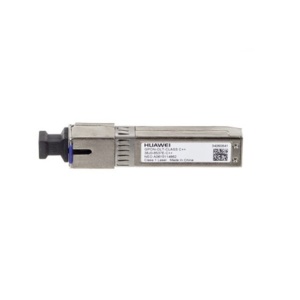
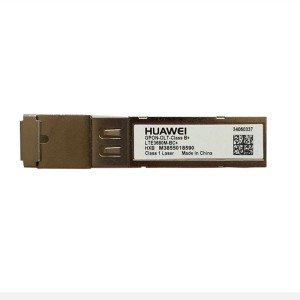
Why legacy copper backhauls are collapsing under Gigabit wireless loads and how all-optical 10G SFP architectures resolve bandwidth bottlenecks.
The migration from traditional Fiber-to-the-Home (FTTH) to Fiber-to-the-Room (FTTR) signifies the most radical architectural transformation in broadband networking over the past two decades. As Wi-Fi 6 (IEEE 802.11ax) expands theoretical wireless transfer thresholds beyond 9.6 Gbps across 160 MHz contiguous channels and 8x8 MU-MIMO arrays, conventional Category-5e or Category-6 twisted-pair copper infrastructures have become severe transmission choke points. The integration of SFP 10GB transceivers provides the essential unconstrained optical conduit required to link centralized Optical Line Terminals (OLTs) directly to distributed Room Optical Network Units (Edge ONUs) and micro Wi-Fi 6 access nodes.
Delivers true non-blocking line-rate performance of 9.953 to 10.3125 Gbps, fully saturating multi-gigabit Wi-Fi 6 wireless streams without packet queuing.
Replaces copper packet retransmissions and collision-prone arbitration with deterministic single-mode optical transmission, sustaining <1ms latency for AR/VR.
Engineered with superior dynamic receive sensitivity and high optical output (Class C++/B+ options) to comfortably overcome multi-point micro-splitter attenuation.
Global telecommunications operators are experiencing an unprecedented plateau in legacy triple-play revenues, prompting an industry-wide pivot toward premium Quality-of-Experience (QoE) enterprise and residential monetization. FTTR has emerged as the premier monetization vehicle, transitioning the operator's operational domain beyond the residential gateway into internal living and working spaces. In enterprise campuses, commercial clinics, boutique hospitality, and luxury multi-dwelling complexes, users demand frictionless zero-loss handover between wireless nodes alongside gigabit symmetrical uploads for cloud computing, AI modeling, and concurrent 8K streaming.
Deploying 10G SFP+ modules at the central FTTR hub (often embedded inside an advanced micro-OLT or high-density distribution switch) enables telecom providers and system integrators to configure an all-optical point-to-multipoint (P2MP) or point-to-point (P2P) bus throughout premises. Unlike legacy copper cabling, which suffers significant radio-frequency attenuation and high EMI susceptibility in proximity to electrical conduits, transparent micro-optical fiber connected via 10G transceivers delivers an undegradable life cycle exceeding 30 years.
Wi-Fi 6 introduces orthogonal frequency-division multiple access (OFDMA), 1024-QAM modulation, and target wake time (TWT), engineered primarily to handle ultra-dense concurrent user scenarios. However, the theoretical aggregate air interface rate of 9.6 Gbps instantly overwhelms standard 1 Gbps RJ45 copper uplinks. Even multi-gigabit copper (2.5G/5G Base-T) introduces excessive thermal dissipation, high power draw (often exceeding 2.5W to 3.5W per port), and strict distance penalties across existing low-grade structured cabling.
By contrast, a modern SFP 10GB optical module—whether utilizing XGS-PON asymmetric/symmetric protocols or point-to-point 10GBASE-LR/SR fiber protocols—consumes less than 1.5W per interface while ensuring immune, instantaneous transport over distances ranging from 300 meters inside large facilities to 20 kilometers across campus backbones. This dramatic reduction in thermal footprint is critical for compact, fanless in-wall FTTR edge nodes and ceiling-recessed Wi-Fi 6 enterprise access points.
| Architecture Attribute | Legacy FTTH + Cat6 Copper | 10G SFP+ FTTR + Wi-Fi 6 Infrastructure |
|---|---|---|
| Backhaul Bandwidth | 1.0 Gbps bottleneck (Asymmetric) | 10.0 Gbps Symmetric (Non-blocking line rate) |
| Physical Media Lifespan | 5-8 Years (Degrades under interference) | 30+ Years (Transparent silica optical core) |
| End-to-End Latency | 15ms – 45ms (Prone to jitter and bufferbloat) | ≤ 1.5ms (Sub-millisecond optical deterministic path) |
| Port Power Dissipation | High (>2.8W for 10GBase-T copper) | Low (≤1.2W – 1.5W for 10G SFP+ Optical) |
| Concurrent 4K/8K Streams | Capped at 8-12 concurrent high-bitrate sessions | 100+ concurrent ultra-HD uncompressed channels |
| Inter-Room Roaming Drop Rate | >5% (Disjointed autonomous APs) | <0.01% (Zero-packet-loss centralized optical coordination) |
Modern smart estates feature hundreds of Internet-of-Things (IoT) sensors alongside heavy digital loads: networked NAS storage backup, multi-room uncompressed 8K audio/video distribution, home cloud computing nodes, and cloud-synced security camera arrays. By installing a master optical terminal populated with 10G SFP transceivers, single-mode micro-fiber extends seamlessly into every living area, master suite, and outdoor terrace. Each room's Wi-Fi 6 access point operates at full 160MHz channel bandwidth without competing for an upstream bottleneck, delivering pervasive gigabit speeds everywhere.
Open-plan corporate campuses and co-working environments suffer severely from wireless channel congestion and backhaul contention during peak conference hours. With 10G SFP optical uplinks feeding localized Wi-Fi 6 access units, hundreds of software engineers, financial analysts, and video editors can execute concurrent bi-directional telepresence meetings, git pushes, and heavy cloud rendering without interface degradation or packet loss.
In modern hospitals, surgical theaters, and diagnostic clinics, the instantaneous transfer of multi-gigabyte PACS medical imaging files (CT, MRI) cannot tolerate latency spikes or copper electromagnetic interference generated by imaging machines. FTTR optical architecture powered by SFP 10GB links provides absolute galvanic isolation and uncompressed transfer straight to mobile surgical Wi-Fi 6 carts and bedside clinician tablets.
Smart manufacturing facilities utilize hundreds of Automated Guided Vehicles (AGVs) and autonomous mobile robots (AMRs) that communicate continuously with edge compute servers. Millisecond-level optical backhauling enabled by 10G SFP transceivers guarantees that handoffs between factory overhead Wi-Fi 6 APs remain seamless, preventing emergency braking triggers caused by wireless disconnects.
The optical networking trajectory is moving at lightning speed. As Wi-Fi 7 (802.11be) begins enterprise rollouts offering 320MHz channel allocations and multi-link operation (MLO) yielding speeds in excess of 30 Gbps, 10G SFP infrastructure serves as the indispensable bridge. Network operators are actively installing XGS-PON and point-to-point 10G SFP+ modules today because they provide seamless coexistence with next-generation 50G-PON systems across the same optical distribution network (ODN) via wavelength division multiplexing (WDM).
Furthermore, AI-driven optical performance monitoring (telemetry embedded directly within modern SFP+ transceivers via Digital Optical Monitoring / DOM) enables predictive failure diagnostics. Network operators can remotely detect micro-bends in fiber runs, sudden optical power drops, and thermal stress across FTTR sub-nodes before any service disruption impacts the end-user.
Established in 2006, Wenzhou AIOU Optical Communication Co., Ltd. is a professional high-tech enterprise dedicated to the full industrial chain of optical network access solutions, covering research and development, manufacturing, sales, and after-sales service. We focus on delivering cutting-edge passive optical network (PON) products, including EPON, GPON, and XPON series, which are carefully tailored to meet the diverse needs of global customers in different regions and industries. With a firm commitment to independent innovation, we have built a strong R&D team composed of senior engineers with years of industry experience, holding multiple core technology patents and forming a comprehensive industrial chain, thus effectively serving various sectors such as operator networks, government and enterprise information systems, smart parks, and home broadband access.
Our complete product line covers OLT (Optical Line Terminal), ONU (Optical Network Unit), high-performance optical modules, and network switching equipment, supporting access rates ranging from 10/100M to 10G. These solutions are characterized by high performance, stable reliability, low latency, and easy deployment, perfectly aligning with customers’ demands for secure, stable, and high-speed communication networks. All our products have passed strict CE certification, as well as other international quality certifications, and are exported to more than 20 countries and regions across South America, Africa, Eastern Europe, Southeast Asia, and the Middle East, winning wide recognition from global partners for their superior quality and cost-effectiveness.
We operate a standardized 2,000-square-meter production zone equipped with advanced automated production and testing equipment, where we strictly adhere to ISO9001 quality management systems, CCC, and CE standards to ensure the consistency and reliability of each product. Our core mission is to exceed customer expectations by providing premium quality products, efficient and thoughtful after-sales services, and industry-leading technical support, continuously driving technological innovation and development in the global optical network infrastructure field.
Optimizing optical budgets, connector cleanliness, and heat dissipation across distributed high-speed wireless architectures.
Deploying SFP 10GB modules across enterprise and residential FTTR environments requires rigorous adherence to optical link budget engineering. Unlike conventional telecom outside plant (OSP) deployments that involve long, uninterrupted fiber runs, FTTR architectures feature high split ratios, multiple patch panels, transparent micro-optical conduits, and tight-radius corner bends inside architectural skirting boards.
Fully compliant, carrier-grade optical transceivers for GPON, XGS-PON, and 10G optical access deployments.