Wenzhou AIOU Optical Communication Co., Ltd.



Leave Your Message
-
 Get Your Quote
-
 Email
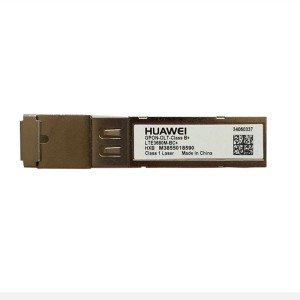
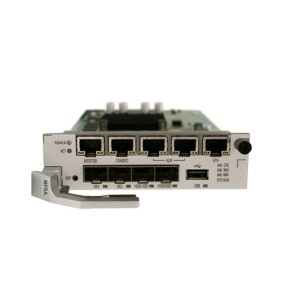
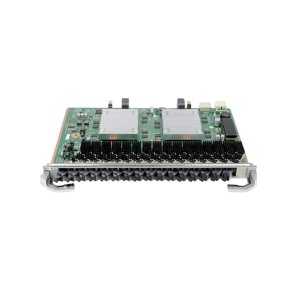
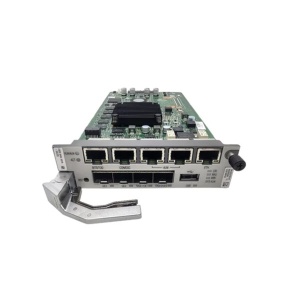
In the era of cloud computing, hyper-scale virtualization, and artificial intelligence (AI) workloads, data centers are experiencing unprecedented data traffic growth. To handle this influx, optical switching networks must continuously evolve. At the core of this evolution is the optimization of physical fiber infrastructure. SFP 10G WDM (Wavelength Division Multiplexing) transceivers have emerged as a cornerstone technology for maximizing bandwidth, reducing cabling complexity, and optimizing optical interface switching mechanisms.
By leveraging Wavelength Division Multiplexing within the Small Form-factor Pluggable Plus (SFP+) footprint, network engineers can transmit multiple independent data channels over a single strand of fiber using different wavelengths of light. This capability is critical for modern data center optical interface switching, where physical space in cable conduits and rack space is at a premium. The industrial landscape is witnessing a strong demand for 10G WDM systems, particularly in edge data centers, metro access nodes, and enterprise private clouds, where cost-to-performance ratios must be carefully balanced.
When implementing SFP 10G WDM transceivers for data center optical interface switching, network architects must choose between Coarse Wavelength Division Multiplexing (CWDM) and Dense Wavelength Division Multiplexing (DWDM). Both technologies serve the purpose of combining multiple wavelengths onto a single fiber, but they differ significantly in channel spacing, capacity, and application scenarios.
CWDM utilizes a wider channel spacing of 20nm, typically operating in the range of 1270nm to 1610nm. Because of the wide channel spacing, cheaper uncooled lasers can be used, making CWDM SFP+ modules highly cost-effective. It supports up to 18 channels on a single-mode fiber link. This is ideal for short-to-medium range switching networks within enterprise data centers or campus networks where distances do not exceed 80 kilometers.
DWDM utilizes much tighter channel spacing, typically 0.8nm (100 GHz grid) or 0.4nm (50 GHz grid), operating in the C-band (1525nm to 1565nm). This precision allows DWDM to pack up to 40 or 80 channels onto a single fiber pair. DWDM SFP+ modules require temperature-stabilized cooled lasers, which increases the initial cost but offers massive scalability. DWDM is the preferred choice for Data Center Interconnects (DCI) and core optical switching backbones where long-distance transmission and high capacity are paramount.
In optical interface switching architectures, these WDM transceivers interface directly with passive optical multiplexers/demultiplexers (Mux/Demux). The switch routes traffic to a specific physical port housing a WDM transceiver, which translates the electrical signal into a specific optical wavelength. The Mux/Demux combines these wavelengths, enabling a single physical fiber patch panel to switch terabits of aggregated data traffic seamlessly.
The implementation of SFP 10G WDM transceivers is not limited to simple point-to-point connections. They are integrated into complex optical switching fabrics to solve diverse networking challenges:
As we look to the future, the integration of WDM technology with optical interface switching is moving towards higher speeds, automation, and energy efficiency. While 10G WDM remains highly relevant due to its mature ecosystem and low cost, the industry is transitioning towards 25G, 100G, and 400G WDM systems. However, the fundamental principles of optical multiplexing remain the same.
One major trend is the development of **Tunable SFP+ WDM transceivers**. Historically, network operators had to stock different transceivers for each specific wavelength channel. Tunable transceivers allow the optical interface to dynamically adjust its wavelength via software command. This drastically reduces inventory costs and enables software-defined optical switching networks, where wavelengths can be routed dynamically to balance traffic loads across the data center.
Furthermore, the integration of **Silicon Photonics** is enabling the co-packaging of optics (CPO) directly with the switch ASIC. This reduces signal degradation, latency, and power consumption, paving the way for green data centers that consume less power per gigabit of switched traffic.
Established in 2006, Wenzhou AIOU Optical Communication Co., Ltd. is a professional high-tech enterprise dedicated to the full industrial chain of optical network access solutions, covering research and development, manufacturing, sales, and after-sales service. We focus on delivering cutting-edge passive optical network (PON) products, including EPON, GPON, and XPON series, which are carefully tailored to meet the diverse needs of global customers in different regions and industries. With a firm commitment to independent innovation, we have built a strong R&D team composed of senior engineers with years of industry experience, holding multiple core technology patents and forming a comprehensive industrial chain, thus effectively serving various sectors such as operator networks, government and enterprise information systems, smart parks, and home broadband access.
Our complete product line covers OLT (Optical Line Terminal), ONU (Optical Network Unit), high-performance optical modules, and network switching equipment, supporting access rates ranging from 10/100M to 10G. These solutions are characterized by high performance, stable reliability, low latency, and easy deployment, perfectly aligning with customers' demands for secure, stable, and high-speed communication networks. All our products have passed strict CE certification, as well as other international quality certifications, and are exported to more than 20 countries and regions across South America, Africa, Eastern Europe, Southeast Asia, and the Middle East, winning wide recognition from global partners for their superior quality and cost-effectiveness.
We operate a standardized 2,000-square-meter production zone equipped with advanced automated production and testing equipment, where we strictly adhere to ISO9001 quality management systems, CCC, and CE standards to ensure the consistency and reliability of each product. Our core mission is to exceed customer expectations by providing premium quality products, efficient and thoughtful after-sales services, and industry-leading technical support, continuously driving technological innovation and development in the global optical network infrastructure field.