Wenzhou AIOU Optical Communication Co., Ltd.



Leave Your Message
-
 Get Your Quote
-
 Email
High-performance OLT service boards and optical transceivers engineered for seamless integration in residential broadband infrastructures.
The global demand for high-speed residential internet has reached unprecedented levels. As smart home systems, 4K/8K video streaming, online gaming, and remote working become standard elements of modern life, internet service providers (ISPs) are under intense pressure to upgrade their Fiber-to-the-Home (FTTH) architectures. At the core of this transition is the migration from legacy Gigabit Passive Optical Networks (GPON) to 10-Gigabit-capable systems like XG-PON, XGS-PON, and 10G EPON.
In this context, the SFP 10G SR (Short Range) transceiver plays an indispensable, though often behind-the-scenes, role. While FTTH deployments rely heavily on single-mode fibers (SMF) to span the long distances between the Central Office (CO) and residential homes, the internal infrastructure of the CO or local distribution hubs relies on short-range multi-mode fiber (MMF) connections. Here, SFP 10G SR modules serve as the high-speed, cost-effective bridges connecting core aggregation switches, routers, and Optical Line Terminals (OLTs).
Key Insight: SFP 10G SR modules operate at a nominal wavelength of 850nm over multi-mode fiber, offering reliable 10 Gbps data transmission up to 300 meters (using OM3 MMF) or 400 meters (using OM4 MMF). This makes them the ultimate choice for high-density, intra-facility interconnects in modern FTTH Central Offices.
To understand the value of SFP 10G SR in FTTH residential broadband deployment, one must look at the physical and logical architecture of a modern central office. The network path begins at the IP Edge or Core Router, which receives massive data streams from the wider internet. This core layer must distribute data to the Access Layer, where OLTs manage the individual fiber lines running to thousands of residential homes.
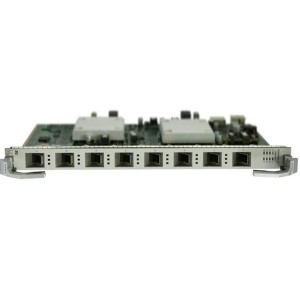
OLT frames are populated with high-speed interface boards, such as the FLHF 10G OLT Service Board or the NXED 10G OLT Service Board. These boards require robust uplinks to connect to the central switch fabric. Because these connections are confined within the same equipment racks or adjacent rows inside the data center/central office, utilizing expensive long-range single-mode optics is economically inefficient. SFP 10G SR transceivers offer the perfect alternative: low power consumption, low latency, and significantly lower hardware costs, all while maintaining a rock-solid 10 Gbps throughput per port.
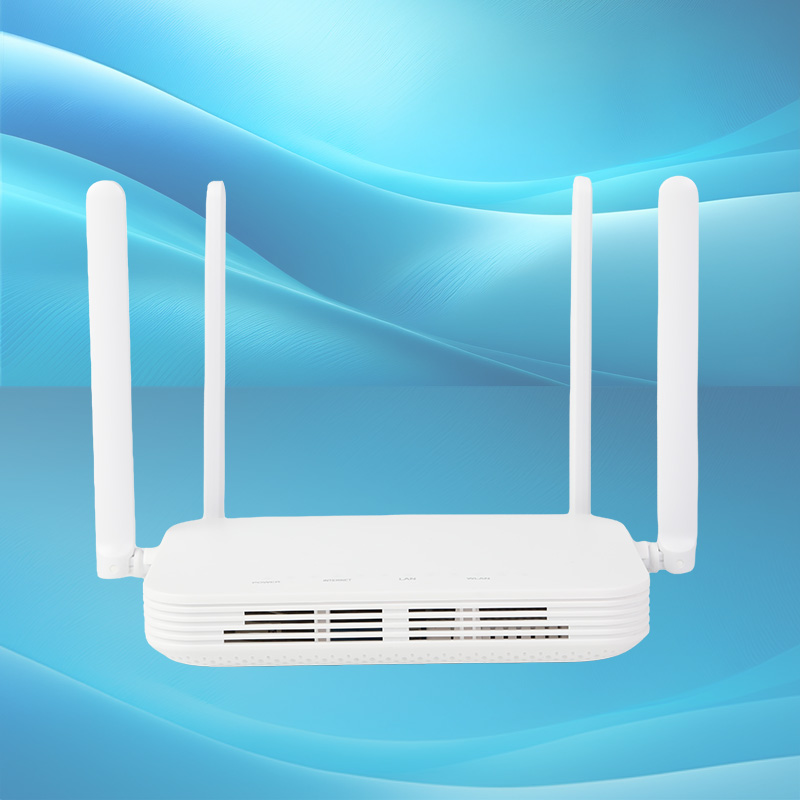
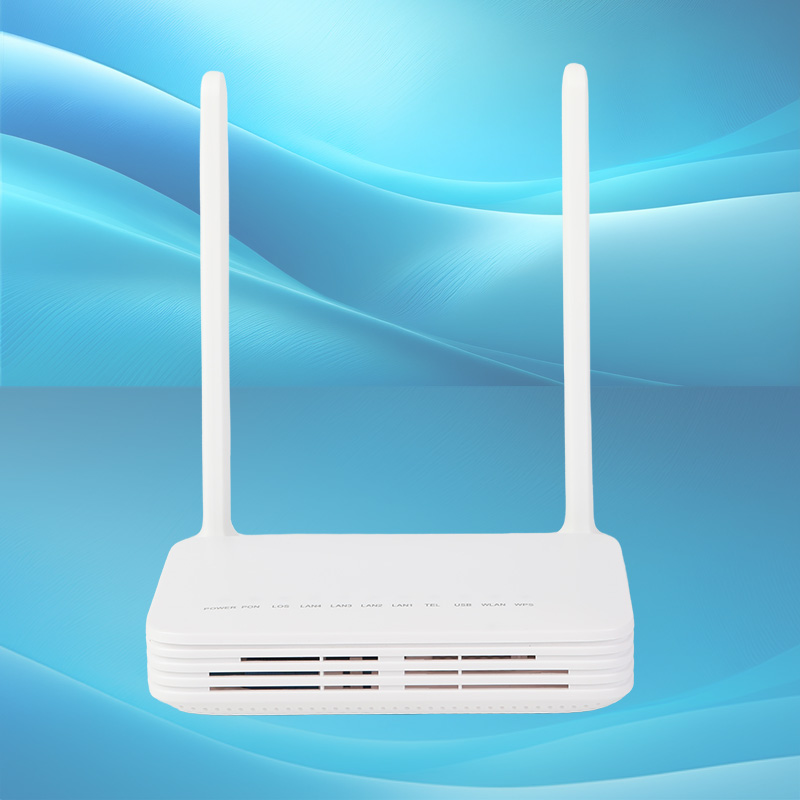
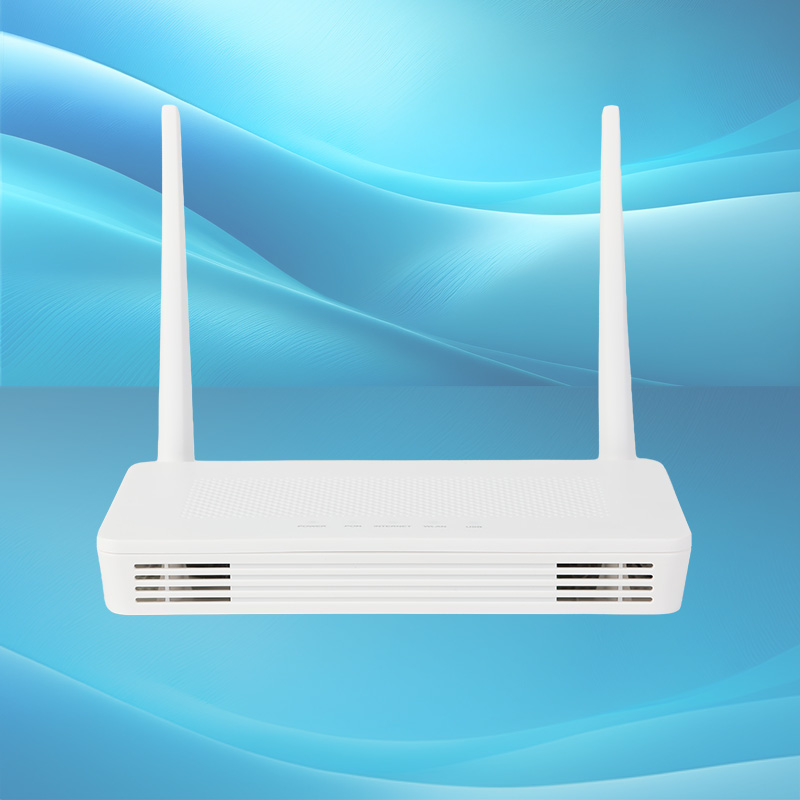
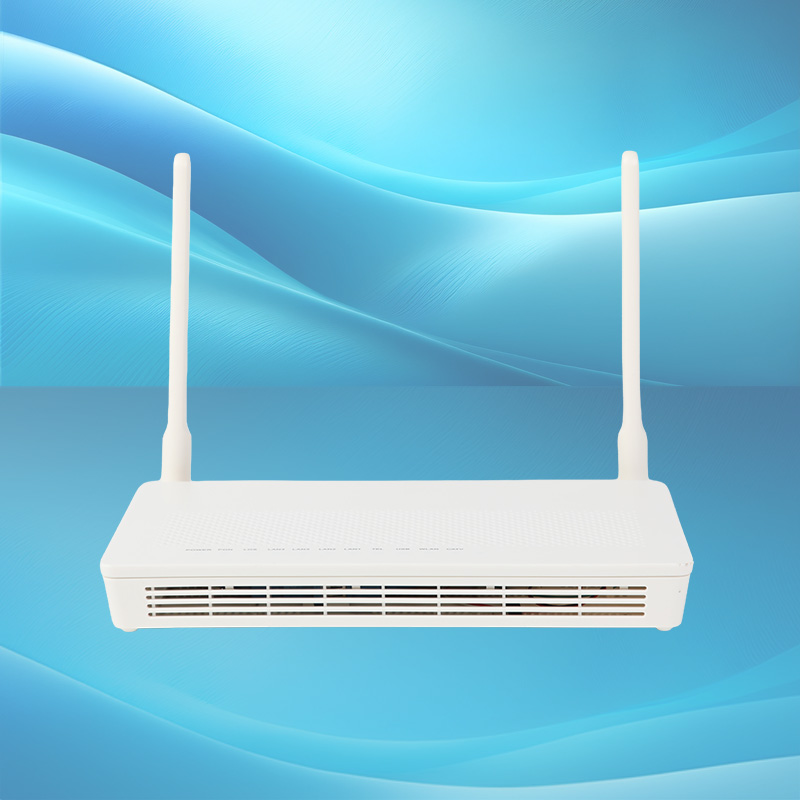
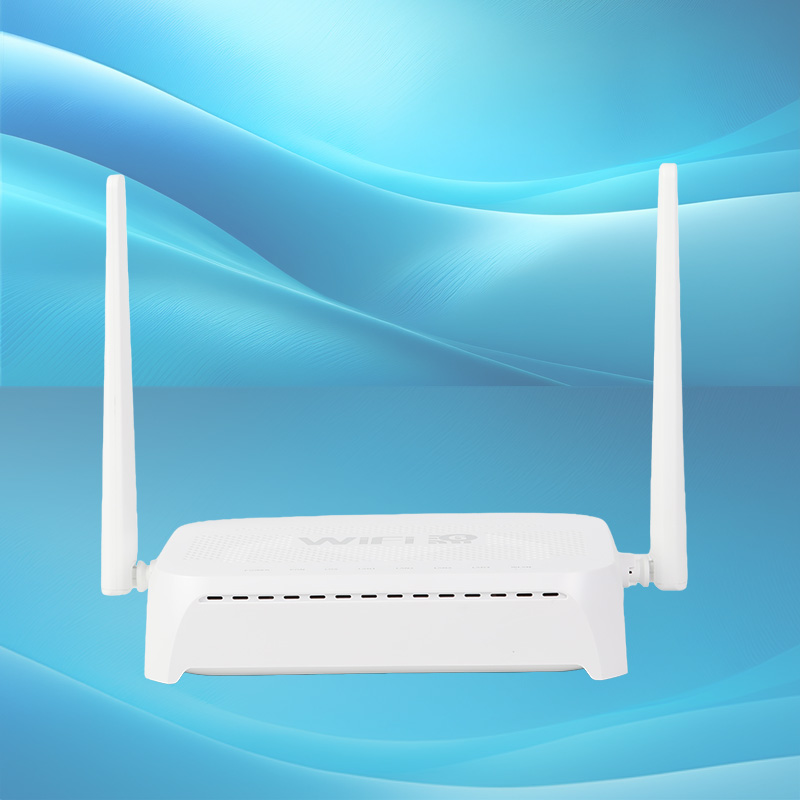
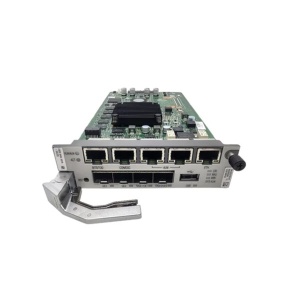
Modern OLT service boards (e.g., MPSA, MPSG) are designed to handle high-density subscriber lines. A single service board can support hundreds of GPON or XG-PON ports. To prevent backhaul bottlenecks, these boards utilize 10GE uplink ports populated with SFP 10G SR transceivers. This architecture ensures that the massive bandwidth demanded by downstream residential ONTs (Optical Network Terminals), such as the AIK662C AX3000 Wi-Fi 6 Edge ONT, is fully supported by the backhaul link without packet loss or jitter.
The telecommunications industry is undergoing a massive structural shift. Copper-based DSL networks are virtually obsolete, and coaxial cable networks are rapidly losing market share to pure fiber installations. Several key commercial trends highlight the growing importance of 10G optical components in residential broadband:
In high-density urban areas, a single central office may serve tens of thousands of homes. The racks are packed with OLTs, aggregation switches, and patch panels. SFP 10G SR modules are deployed in high-density switch ports to aggregate traffic from multiple OLT chassis. By using LC duplex patch cords over OM3/OM4 fiber, network engineers can create clean, structured cabling layouts that minimize airflow obstruction and facilitate easy maintenance.
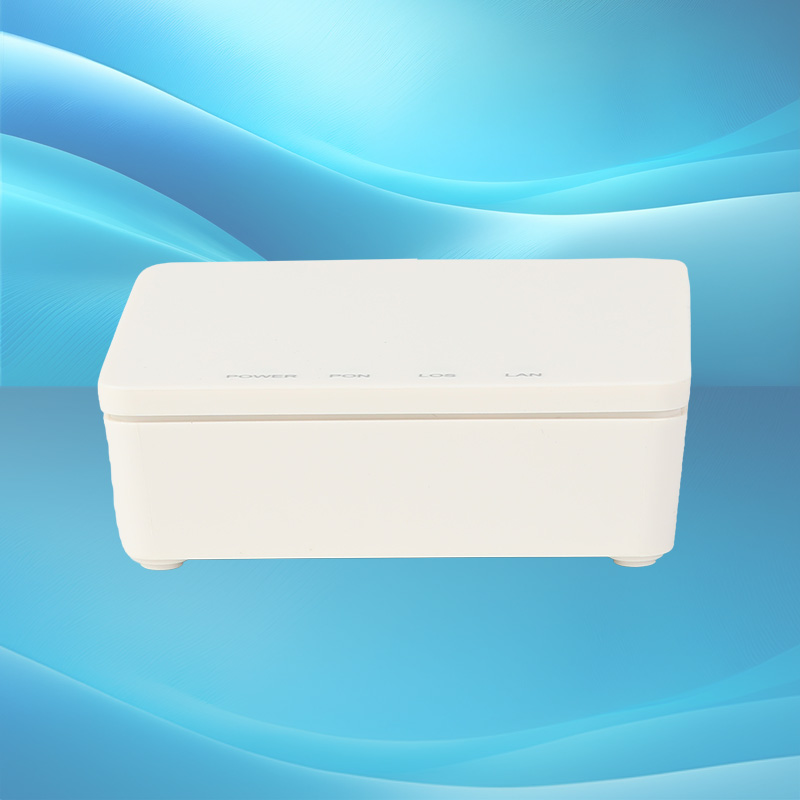
In high-rise residential buildings or apartment complexes, ISPs often deploy a localized distribution node in the basement or utility room. This node acts as a micro-central office. An OLT board (such as the MPSG 10G OLT Service Board) is installed locally. The uplink from this OLT to the building’s main gateway switch is typically run via SFP 10G SR over a vertical multi-mode fiber riser. This setup provides high-capacity backhaul to support hundreds of individual apartments, each equipped with a GPON ONT like the HS8545M5 or HS8145V.
As telecom operators roll out 5G, they are converging their wireless and wireline access networks. Edge computing nodes and localized hubs house both 5G Baseband Units (BBUs) and FTTH OLTs. SFP 10G SR transceivers are used to connect these co-located systems to local edge routers. This convergence allows operators to dynamic-route traffic based on network demand, ensuring that both mobile users and residential broadband subscribers receive optimal performance.
While 10G systems represent the current state-of-the-art for mass residential deployment, the industry is already looking toward 25G and 50G PON technologies. However, the migration path will be evolutionary rather than revolutionary. 10G co-existence frameworks (using WDM filters) allow operators to run GPON, XG-PON, and future 25G PON simultaneously over the same physical fiber plant. SFP 10G SR modules will remain a dominant interface standard for internal aggregation links for the next decade due to their mature technology, robust supply chains, and unparalleled cost-to-performance ratio.
Delivering state-of-the-art optical network access solutions with unmatched reliability and support.


Fiber optic communication equipment is widely used in 5G, data centers and smart cities to enable high-speed transmission.
Supporting ultra-low latency and high-capacity links between base stations and central offices using advanced 10G optical modules.
Facilitating rapid intra-datacenter data exchange over short distances with high efficiency and minimum power footprint.
Connecting municipal sensor networks, HD surveillance cameras, and public Wi-Fi hotspots directly to localized fiber distribution hubs.
A comprehensive range of high-performance Optical Network Terminals (ONT) and Units (ONU) to deliver gigabit speeds directly to the subscriber.