Wenzhou AIOU Optical Communication Co., Ltd.



Leave Your Message
-
 Get Your Quote
-
 Email
In the rapidly evolving landscape of modern data centers, the demand for high-speed, reliable, and cost-effective interconnectivity has never been more critical. As cloud computing, artificial intelligence (AI), big data analytics, and virtualization continue to saturate network bandwidth, data center architectures are undergoing significant transformations. At the core of this transformation is the physical layer optical interconnect. The SFP 10G SR (Short Range) optical module remains a cornerstone technology for short-reach high-speed data transmission, particularly within optical interface switching environments.
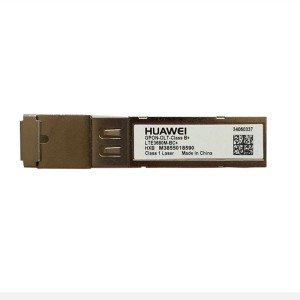
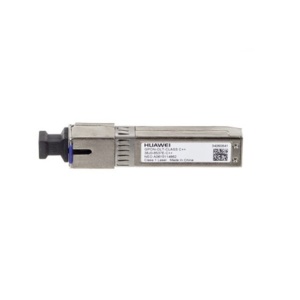
An SFP 10G SR transceiver is designed to operate over multi-mode fiber (MMF) at a nominal wavelength of 850nm. Utilizing Vertical-Cavity Surface-Emitting Laser (VCSEL) technology, it delivers a robust 10 Gigabit Ethernet connection over distances up to 300 meters on OM3 MMF, and up to 400 meters on OM4 MMF. When integrated into data center switch fabrics, these modules enable seamless optical interface switching, linking top-of-rack (ToR) switches to leaf and spine switches with minimal latency and high thermal efficiency.
Optical interface switching refers to the routing and management of optical signals across network switches, routers, and physical distribution frames. In traditional copper-based architectures, electrical signals suffer from severe attenuation, electromagnetic interference (EMI), and high power consumption over distances exceeding a few meters. Optical interface switching bypasses these limitations by keeping data in the optical domain or converting it efficiently at the transceiver interface.
By deploying SFP 10G SR transceivers in network switches, data centers achieve high-density port configurations. The compact size of the SFP+ form factor allows switch manufacturers to place up to 48 or even 96 ports in a single 1RU (Rack Unit) chassis. When these switches route traffic, the optical interfaces dynamically link server NICs (Network Interface Cards) to core distribution paths, optimizing throughput and preventing localized network bottlenecks.
From a commercial perspective, the market for 10G optical interface switching is characterized by a balance of cost-efficiency and performance. While 100G, 400G, and even 800G optical solutions are actively deployed in hyperscale cloud cores, 10G and 25G remain the dominant speeds for enterprise networks, edge data centers, and access networks.
In a standard leaf-spine data center topology, servers are housed in racks, with each rack containing a ToR switch. The connection from the individual server NICs to the ToR switch often utilizes direct-attach copper (DAC) cables for ultra-short runs (under 5 meters). However, the uplink from the ToR switch to the leaf switch—which may be located in a different row or centralized patch area—requires optical fiber. The SFP 10G SR is the ideal interface here, providing the necessary reach and bandwidth to aggregate server traffic without introducing electromagnetic susceptibility.
Storage architectures require consistent, low-latency data paths to prevent read/write queuing. Fibre Channel over Ethernet (FCoE) and high-speed iSCSI protocols rely heavily on 10G optical switching. By equipping storage controllers and SAN switches with SFP 10G SR modules, data centers ensure rapid backup, disaster recovery, and real-time database access across localized storage arrays.
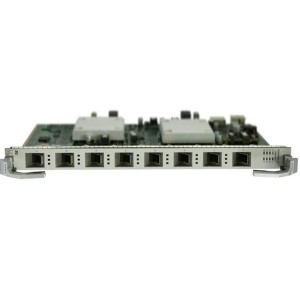
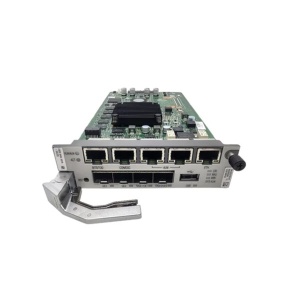
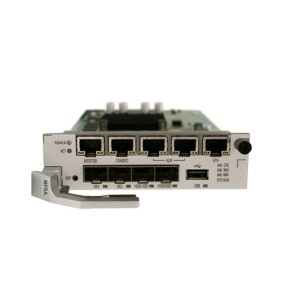
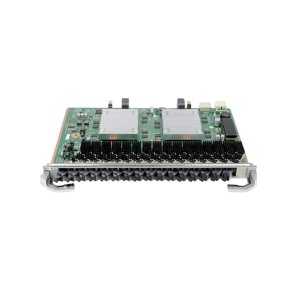
In broadband access networks (FTTH/FTTB), Optical Line Terminals (OLTs) serve as the aggregation point for thousands of subscriber optical network units (ONUs). These OLTs require high-speed uplinks to connect to the metro IP core. Service providers utilize high-speed 10GE optical interface boards (such as the NXED or MPSA boards) populated with 10G optical modules to switch and route subscriber traffic into the wider internet backbone. This bridge between access network protocols (GPON/EPON) and the Ethernet core highlights the versatility of optical interface switching.
As the industry marches toward 400G and 800G, the role of 10G optical switching is shifting but not disappearing. Multi-rate transceivers (supporting 1G/10G or 10G/25G) are gaining traction, allowing network administrators to upgrade switch hardware incrementally. Additionally, the development of silicon photonics and advanced VCSEL manufacturing is driving down the cost of short-range optical components even further, ensuring that SFP 10G SR and its direct successors remain economically viable for the next decade.
Established in 2006, Wenzhou AIOU Optical Communication Co., Ltd. is a professional high-tech enterprise dedicated to the full industrial chain of optical network access solutions, covering research and development, manufacturing, sales, and after-sales service. We focus on delivering cutting-edge passive optical network (PON) products, including EPON, GPON, and XPON series, which are carefully tailored to meet the diverse needs of global customers in different regions and industries. With a firm commitment to independent innovation, we have built a strong R&D team composed of senior engineers with years of industry experience, holding multiple core technology patents and forming a comprehensive industrial chain, thus effectively serving various sectors such as operator networks, government and enterprise information systems, smart parks, and home broadband access.
Our complete product line covers OLT (Optical Line Terminal), ONU (Optical Network Unit), high-performance optical modules, and network switching equipment, supporting access rates ranging from 10/100M to 10G. These solutions are characterized by high performance, stable reliability, low latency, and easy deployment, perfectly aligning with customers’ demands for secure, stable, and high-speed communication networks. All our products have passed strict CE certification, as well as other international quality certifications, and are exported to more than 20 countries and regions across South America, Africa, Eastern Europe, Southeast Asia, and the Middle East, winning wide recognition from global partners for their superior quality and cost-effectiveness.
We operate a standardized 2,000-square-meter production zone equipped with advanced automated production and testing equipment, where we strictly adhere to ISO9001 quality management systems, CCC, and CE standards to ensure the consistency and reliability of each product. Our core mission is to exceed customer expectations by providing premium quality products, efficient and thoughtful after-sales services, and industry-leading technical support, continuously driving technological innovation and development in the global optical network infrastructure field.