Wenzhou AIOU Optical Communication Co., Ltd.



Leave Your Message
-
 Get Your Quote
-
 Email
High-reliability SFP+ transceivers and service boards optimized for modern data center architectures
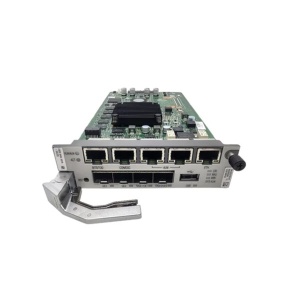
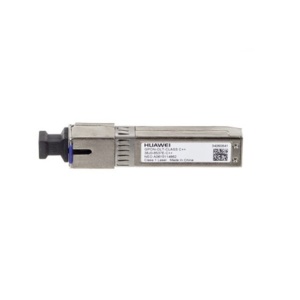
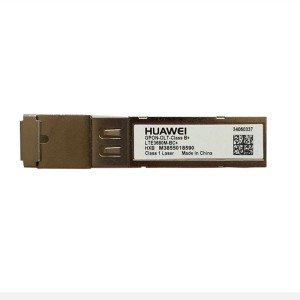
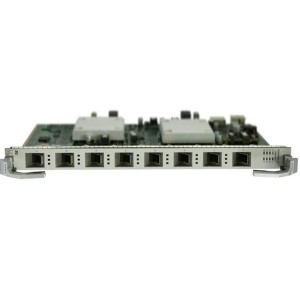
In the era of cloud computing, big data, and artificial intelligence, modern data centers are facing unprecedented demands for data throughput and transmission reliability. The structural design of these facilities relies heavily on high-density optical interface switching to manage high-speed traffic between core switches, aggregation layers, and access servers. Among the plethora of optical transceiver form factors, the SFP 10G LR (Long Reach) module remains a fundamental building block for long-distance, high-speed optical connections.
Operating over single-mode fiber (SMF) at a nominal wavelength of 1310nm, the SFP 10G LR transceiver is designed to support transmission distances of up to 10 kilometers. This capacity makes it uniquely suited for inter-building connectivity, metropolitan area networks (MANs), and larger data center campuses where short-reach (SR) multi-mode solutions fall short. By converting electrical signals from switches into optical signals via a Distributed Feedback (DFB) laser, these transceivers ensure minimal dispersion and attenuation over extended physical spans.
Key Technical Parameter: SFP 10G LR utilizes a 1310nm DFB transmitter and a PIN receiver, supporting data rates up to 10.3125 Gbps. It features Digital Optical Monitoring (DOM) which allows network administrators to monitor real-time parameters such as optical output power, optical input power, temperature, laser bias current, and transceiver supply voltage.
While hyper-scale data center architectures are rapidly adopting 100G, 400G, and even 800G optical interfaces for their core networks, 10G SFP+ LR remains highly relevant and commercially dominant in several critical segments:
The global market for optical transceivers is experiencing steady growth, driven by the expansion of 5G infrastructure, enterprise virtualization, and edge computing nodes. SFP 10G LR optical modules occupy a stable and critical market share. As telecom operators transition from traditional copper access to fiber-to-the-home (FTTH) networks, GPON, EPON, and XG-PON OLT (Optical Line Terminal) service boards are integrated with 10G optical interfaces to handle the aggregated traffic from thousands of end-users.
From an industrial perspective, standardization is governed by Multi-Source Agreements (MSAs), ensuring that SFP 10G LR modules from various manufacturers are fully interoperable with switches from major brands. This interoperability has commoditized the technology, driving down manufacturing costs while raising quality standards. Today, reliability is the primary differentiator, with leading enterprises focusing on advanced testing protocols, automated alignment, and robust quality control systems to guarantee zero packet loss in mission-critical environments.
Strict compliance with SFF-8431, SFF-8432, and IEEE 802.3ae 10GBASE-LR standards ensures seamless deployment across diverse hardware ecosystems.
Modern OLT service boards rely on 10G LR interfaces to uplink FTTH traffic to the core IP network, bridging access and transport infrastructures.
To fully appreciate the utility of SFP 10G LR transceivers, it is essential to analyze how they are deployed within modern optical interface switching topologies:
Large enterprises and universities often distribute their server assets across multiple buildings within a campus. While short-reach multi-mode fiber (such as OM3/OM4) is sufficient for intra-rack cabling, connections between buildings require single-mode fiber to overcome optical attenuation. SFP 10G LR transceivers are installed in the core switches of each building, enabling a high-speed 10Gbps backbone link over distances up to 10 kilometers. This setup ensures low-latency data replication, synchronous backups, and seamless virtualization across the entire campus network.
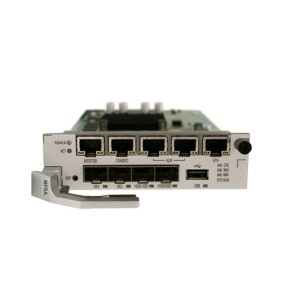
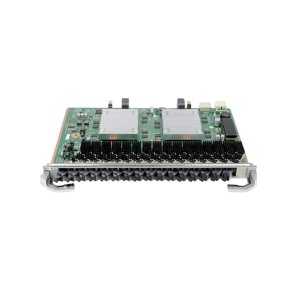
In telecommunication central offices, Optical Line Terminals (OLTs) manage downstream connections to thousands of Optical Network Units (ONUs) at subscriber premises. The aggregation of this massive traffic requires high-capacity uplinks to the metropolitan core network. OLT service boards (such as MPSA, MPSG, and FLHF boards) utilize 10GE optical interface slots populated with SFP 10G LR modules. This allows high-speed uplink transport to the IP core network, ensuring that bandwidth-heavy applications like 4K video streaming and cloud gaming run smoothly for end-users.
Modern data centers have largely abandoned the traditional three-tier network architecture in favor of a two-tier spine-leaf design. In this topology, every leaf switch connects to every spine switch, creating a highly redundant and low-latency fabric. SFP 10G LR transceivers are commonly used for the leaf-to-spine connections when the physical distance between the cabinets exceeds the limits of copper DACs or multi-mode fiber. This ensures consistent, high-bandwidth communication across the entire switching matrix.
With the rise of IoT and real-time data processing, computing power is moving closer to the source of data generation. Edge computing nodes are deployed in local offices, factories, and smart city hubs. These nodes must transmit processed data back to centralized cloud data centers. SFP 10G LR modules provide the necessary long-reach optical interface to connect edge switches to regional fiber networks, facilitating rapid data synchronization and low-latency remote management.
As network demands continue to escalate, several emerging trends are shaping the future of optical interface switching and the role of SFP transceivers:
Silicon photonics technology integrates optical components directly onto silicon microchips. This innovation promises to dramatically reduce the manufacturing cost and power consumption of optical transceivers. Future iterations of 10G and 25G LR transceivers will leverage silicon photonics to achieve higher reliability and smaller form factors, facilitating even denser switch configurations.
To maximize port density, modern high-speed switches (operating at 100G or 400G) support breakout configurations. For example, a single 100G QSFP28 port can be split into four 25G or 10G channels using breakout cables. This allows legacy 10G SFP+ LR interfaces to connect directly to next-generation high-speed core switches, preserving existing infrastructure investments while enabling gradual network upgrades.
With data centers consuming vast amounts of global electricity, reducing energy consumption is a top priority. Optical component manufacturers are focusing on developing low-power transceivers. By optimizing laser driver circuits and using highly efficient components, modern 10G LR transceivers are achieving power consumption ratings well below historical averages, contributing to more sustainable IT operations.
Established in 2006, Wenzhou AIOU Optical Communication Co., Ltd. is a professional high-tech enterprise dedicated to the full industrial chain of optical network access solutions, covering research and development, manufacturing, sales, and after-sales service. We focus on delivering cutting-edge passive optical network (PON) products, including EPON, GPON, and XPON series, which are carefully tailored to meet the diverse needs of global customers in different regions and industries. With a firm commitment to independent innovation, we have built a strong R&D team composed of senior engineers with years of industry experience, holding multiple core technology patents and forming a comprehensive industrial chain, thus effectively serving various sectors such as operator networks, government and enterprise information systems, smart parks, and home broadband access.
Our complete product line covers OLT (Optical Line Terminal), ONU (Optical Network Unit), high-performance optical modules, and network switching equipment, supporting access rates ranging from 10/100M to 10G. These solutions are characterized by high performance, stable reliability, low latency, and easy deployment, perfectly aligning with customers’ demands for secure, stable, and high-speed communication networks. All our products have passed strict CE certification, as well as other international quality certifications, and are exported to more than 20 countries and regions across South America, Africa, Eastern Europe, Southeast Asia, and the Middle East, winning wide recognition from global partners for their superior quality and cost-effectiveness.
We operate a standardized 2,000-square-meter production zone equipped with advanced automated production and testing equipment, where we strictly adhere to ISO9001 quality management systems, CCC, and CE standards to ensure the consistency and reliability of each product. Our core mission is to exceed customer expectations by providing premium quality products, efficient and thoughtful after-sales services, and industry-leading technical support, continuously driving technological innovation and development in the global optical network infrastructure field.
Explore our complete range of optical modules and OLT service boards designed for seamless system integration