Wenzhou AIOU Optical Communication Co., Ltd.



Leave Your Message
-
 Get Your Quote
-
 Email
High-performance 10GbE optical interface modules and OLT service boards engineered to power seamless all-optical connectivity across campus distribution hubs.
Modern educational institutions, multi-tenant innovation parks, and enterprise headquarters are experiencing an exponential surge in data traffic. The transition from legacy copper-based Category 6/7 cabling to Passive Optical LAN (POL) and All-Optical Campus Networks has shifted from a forward-looking concept to an imperative operational standard.
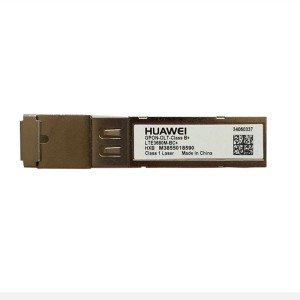
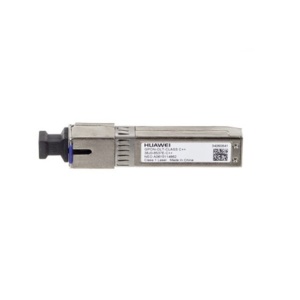
Within this architectural paradigm, the SFP 10G 850nm 300m (10GBASE-SR) transceiver module stands as the ultimate workhorse for short-reach intra-building interconnections, server cluster uplink channels, and edge distribution nodes. Utilizing 850nm Vertical-Cavity Surface-Emitting Laser (VCSEL) technology over multimode fiber (OM3/OM4), it delivers the optimal equilibrium between capital expenditure (CapEx), high energy efficiency, and deterministic sub-millisecond latency.
When architecting a Smart Campus All-Optical distribution tier, network planners select SFP-10G-SR 850nm modules for their outstanding electrical-optical conversion stability and broad interoperability across vendor switches and OLT uplink line cards.
How the intersection of AIoT, hybrid educational frameworks, and green building certifications is driving massive adoption of 10G short-reach optical interconnects.
The fifth-generation fixed network (F5G) defines campus network evolution as "Fiber to the Room" (FTTR) and "Fiber to the Desktop" (FTTD). SFP 10G 850nm modules provide the high-density aggregation foundation required by central OLT platforms to bridge optical distribution points seamlessly without bandwidth throttling.
Global ESG standards require educational and enterprise infrastructures to lower Power Usage Effectiveness (PUE). Replacing heat-intensive 10GBase-T copper transceivers (consuming 2.5W to 4W per port) with SFP+ 850nm optical transceivers (<0.8W) slashes cooling loads and carbon emissions by up to 75% in campus server hubs.
With enterprise Wi-Fi 7 access points supporting theoretical throughputs exceeding 30 Gbps, edge switches require 10G/25G optical uplinks to eliminate upstream congestion. SFP 10G 850nm transceivers deliver robust, interference-free trunking immune to electromagnetic interference (EMI) in harsh institutional environments.
From smart lecture halls to edge AI video inference clusters, explore how short-reach 10G optical links underpin critical campus subsystems.
Modern pedagogy integrates synchronous dual-teacher interactive teaching, 4K digital recording, VR simulation, and interactive digital whiteboards. These high-bandwidth applications generate sustained bilateral throughput between classroom edge switches and building aggregation nodes. SFP 10G 850nm 300m modules eliminate jitter and packet loss, ensuring fluid real-time collaboration with latencies maintained strictly under 2 milliseconds.
University scientific research computing facilities and enterprise R&D departments maintain local high-performance computing (HPC) clusters and Top-of-Rack (ToR) server racks. Utilizing cost-efficient OM3/OM4 duplex LC patch cords, SFP-10G-SR transceivers form low-cost, high-reliability SAN (Storage Area Network) and NAS optical fabrics for massive genomic, CAD, and deep-learning training dataset replication.
Modern campuses operate hundreds of 4K ultra-high-definition optical cameras equipped with on-premise facial recognition, license plate identification, and thermal safety sensors. Aggregate video streams from floor aggregation switches to NVR (Network Video Recorder) matrix arrays demand continuous 10Gbps non-blocking throughput. The SFP 10G 850nm transceiver guarantees lossless 24/7 video capture without frame drops.
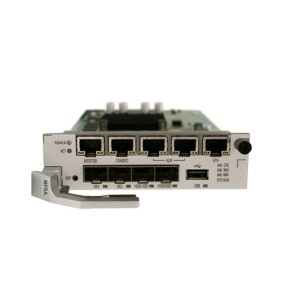
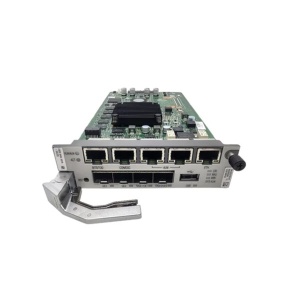
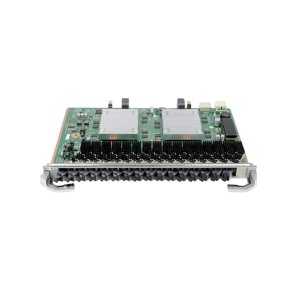
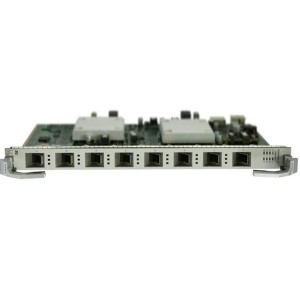
In student residential quarters and faculty administrative towers, dense GPON/XG-PON OLT chassis aggregate hundreds of Optical Network Units (ONUs). Uplink service boards—such as MPSA, FLHF, and NXED boards—rely on 10GE optical interface transceivers to feed core IP/MPLS routers, consolidating thousands of high-speed gigabit user sessions across a resilient fiber topology.
Comprehensive optical and physical parameters for SFP 10G 850nm 300m optical modules designed for carrier-grade campus deployments.
| Parameter | Specification Detail | Standard Compliance | Operational Benefit in Smart Campus |
|---|---|---|---|
| Form Factor | SFP+ (Enhanced Small Form-Factor Pluggable) | SFF-8431, SFF-8432 MSA | Hot-pluggable, high port density across switch line cards |
| Nominal Data Rate | 10.3125 Gbps (also supports 9.95 Gbps to 10.5 Gbps) | IEEE 802.3ae 10GBASE-SR | Wire-speed line rate for campus core and aggregation tiers |
| Laser / Transmitter Type | 850 nm VCSEL (Vertical-Cavity Surface-Emitting) | Class 1 Eye Safety (IEC 60825-1) | High reliability, low manufacturing cost, minimal heat generation |
| Receiver Type | PIN Photodiode with TIA Transimpedance Amp | SFF-8472 Diagnostic Standard | High sensitivity (-11.1 dBm minimum sensitivity) |
| Optical Reach / Media | 300 m on 50/125µm OM3 MMF (400 m on OM4 MMF) | TIA/EIA-492AAAC-A | Covers 98% of all intra-building optical link requirements |
| Optical Connector | Standard Duplex LC (UPC Polish) | IEC 61754-20 | Universal latching mechanism, high vibration tolerance |
| Digital Diagnostics (DDM/DOM) | Real-time Tx Power, Rx Power, Temp, Voltage, Bias Current | SFF-8472 Revision 12.2 | Automated predictive failure alerts and remote NOC telemetry |
| Power Consumption & Temp | < 0.8W | Operating: 0°C to +70°C (Commercial / Industrial Opt.) | RoHS-6 Compliant, CE, FCC | Eco-friendly, reduced datacenter cooling overhead |
Established in 2006, Wenzhou AIOU Optical Communication Co., Ltd. is a professional high-tech enterprise dedicated to the full industrial chain of optical network access solutions, covering research and development, manufacturing, sales, and after-sales service. We focus on delivering cutting-edge passive optical network (PON) products, including EPON, GPON, and XPON series, which are carefully tailored to meet the diverse needs of global customers in different regions and industries. With a firm commitment to independent innovation, we have built a strong R&D team composed of senior engineers with years of industry experience, holding multiple core technology patents and forming a comprehensive industrial chain, thus effectively serving various sectors such as operator networks, government and enterprise information systems, smart parks, and home broadband access.
Our complete product line covers OLT (Optical Line Terminal), ONU (Optical Network Unit), high-performance optical modules, and network switching equipment, supporting access rates ranging from 10/100M to 10G. These solutions are characterized by high performance, stable reliability, low latency, and easy deployment, perfectly aligning with customers’ demands for secure, stable, and high-speed communication networks. All our products have passed strict CE certification, as well as other international quality certifications, and are exported to more than 20 countries and regions across South America, Africa, Eastern Europe, Southeast Asia, and the Middle East, winning wide recognition from global partners for their superior quality and cost-effectiveness.
We operate a standardized 2,000-square-meter production zone equipped with advanced automated production and testing equipment, where we strictly adhere to ISO9001 quality management systems, CCC, and CE standards to ensure the consistency and reliability of each product. Our core mission is to exceed customer expectations by providing premium quality products, efficient and thoughtful after-sales services, and industry-leading technical support, continuously driving technological innovation and development in the global optical network infrastructure field.
To realize the full operational lifespan of SFP 10G 850nm 300m transceivers across campus all-optical networks, network engineers should uphold rigorous physical layer hygiene and optical link budgeting:
As universities and enterprise parks deploy centralized AI computing nodes and high-frequency edge caches, campus backbones are progressively adopting dual-speed and tri-speed migration strategies:
Because OM3/OM4 multimode fiber is already deployed for 10G 850nm channels, campus network administrators can easily upgrade specific high-demand aggregation links to 25G SFP28 SR or 100G QSFP28 SR4 without recabling the physical duct infrastructure.
Simultaneously, XGS-PON and 50G-PON OLT access platforms utilize wavelength-division multiplexing (WDM) coexistence elements, enabling legacy 10G SFP optical modules and future symmetric high-rate transceivers to share identical optical distribution networks (ODN).
Answers to common architecture, compatibility, and implementation questions for IT directors and network engineers.
850nm transceivers utilize Vertical-Cavity Surface-Emitting Lasers (VCSEL), which are substantially more cost-effective to manufacture and consume far less power than 1310nm DFB lasers. Since over 90% of campus building riser distances are under 300 meters, SFP-10G-SR over OM3 multimode fiber offers the lowest total cost of ownership (TCO).
Yes. Many modern 10G OLT interface boards (such as MPSA, NXED, and MPSG series) feature dedicated 10GE SFP+ uplink or cascade optical cages. Inserting an SFP 10G 850nm transceiver enables direct optical trunking into campus aggregation switches or local storage arrays.
While the standard 10GBASE-SR specification rates reach at 300 meters over OM3 fiber (2000 MHz·km modal bandwidth), high-quality transceivers reliably achieve up to 400 meters over OM4 fiber (4700 MHz·km) and up to 400-550 meters over wideband OM5 multimode fiber.
Digital Diagnostic Monitoring (DDM) provides continuous, real-time measurements of optical transmit power, receive power, internal transceiver temperature, laser bias current, and operating voltage. Network management software can automatically alert technicians when optical loss spikes or lasers drift, preventing unplanned downtime.
Explore our full line of carrier-grade OLT service boards, high-power optical modules, and multi-gigabit interface solutions designed for seamless enterprise and institutional connectivity.