Wenzhou AIOU Optical Communication Co., Ltd.



Leave Your Message
-
 Get Your Quote
-
 Email
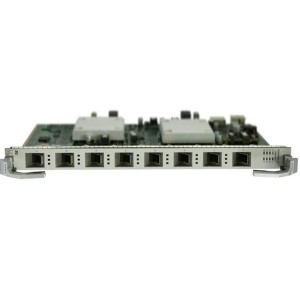
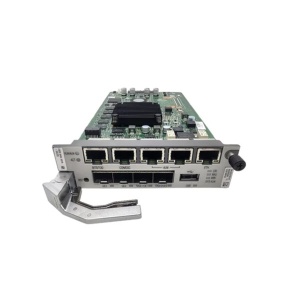
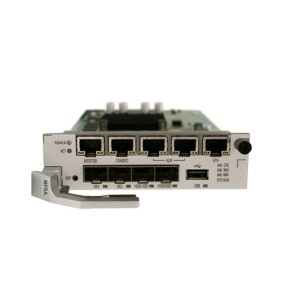
Explore our high-performance OLT service boards and transceiver modules designed for 10G broadband networks.
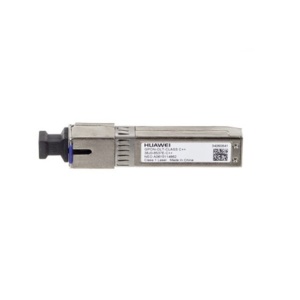
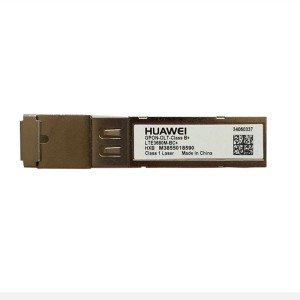
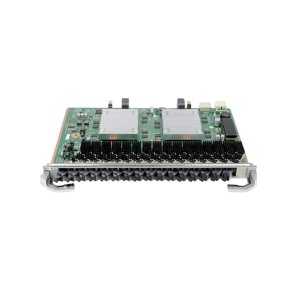
The modern business landscape is undergoing a massive digital transformation. As enterprises transition to cloud-based architectures, real-time collaboration tools, IoT-enabled building automation, and AI-driven data processing, the demand for robust, high-speed, and ultra-reliable network backbones has never been more critical. At the center of this revolution is the need for seamless broadband access that bridges the physical distance between central metropolitan data hubs and decentralized enterprise offices. The Sfp 10g 80 Km For Smart Office Broadband Access Solutions represents a pinnacle technology, offering the exact blend of long-distance transmission capability, high bandwidth, and cost-effective deployment required by today’s intelligent workplaces.
Historically, optical networks in corporate environments were divided into short-range local area networks (LANs) and long-haul metropolitan area networks (MANs). However, as smart cities expand and suburban commercial parks proliferate, the boundaries between these network segments have blurred. Telecommunication operators and enterprise network architects are increasingly seeking unified solutions that can transmit high-speed data directly from central offices (CO) to remote corporate sites up to 80 kilometers away without requiring active, power-consuming intermediate repeaters.
The commercial market for 10G SFP+ transceivers has matured significantly. The SFP+ form factor is widely recognized as the industry standard for 10G Ethernet due to its compact size, hot-swappable design, and low power consumption. The 80km variant, typically utilizing a 1550nm cooled EML laser and a highly sensitive APD (Avalanche Photodiode) receiver, has transitioned from a specialized niche product to a core building block of modern metropolitan networks. This shift is driven by the economics of fiber deployment: eliminating intermediate regenerator stations reduces capital expenditure (CAPEX) and operating expenditure (OPEX) while drastically minimizing potential points of failure along the fiber link.
To understand the value of Sfp 10g 80 Km For Smart Office Broadband Access Solutions, one must look at the underlying physics and engineering of optical transmission. Over an 80-kilometer span of standard single-mode fiber (G.652), signal attenuation and chromatic dispersion become major bottlenecks. The 10G 80km SFP+ transceiver overcomes these challenges through several key design features:
Large corporations often operate multiple campuses, manufacturing plants, and administrative centers spread across a metropolitan region. Instead of leasing expensive dark fiber lines with multiple active repeater hops, network engineers deploy 10G 80km SFP+ modules inside central switches. This establishes direct, high-bandwidth point-to-point links between campuses. The result is a unified, low-latency corporate LAN that supports seamless VoIP, real-time video conferencing, and instantaneous database synchronization across all offices.
In smart office buildings, FTTO is replacing traditional copper-based LANs. Fiber is run directly to each floor or office suite. To connect these massive vertical networks to the broader internet, a high-capacity backhaul link is required. SFP 10G 80km transceivers link the building's main distribution frame (MDF) directly to the Internet Service Provider’s (ISP) core metropolitan network. This ensures that thousands of office workers have simultaneous access to high-speed internet, cloud applications, and external data centers without bottlenecking at the building's edge.
Data redundancy is a cornerstone of modern smart office strategy. Offices must continuously back up critical operational data to off-site locations. The SFP 10G 80km transceiver provides the necessary bandwidth and reach to connect primary office data centers with remote disaster recovery sites. Because the link operates at 10Gbps with minimal latency, businesses can implement synchronous data replication, ensuring that in the event of a local outage, business continuity is maintained with zero data loss.
For telecom operators, delivering dedicated internet access (DIA) and Metro Ethernet services to enterprise clients in smart business parks is a primary revenue driver. By utilizing 10G 80km transceivers in their Optical Line Terminals (OLTs) and service boards, carriers can extend their service footprint far into suburban and rural areas. This allows them to offer SLA-backed, high-speed fiber services to remote offices that were previously out of reach, optimizing their network infrastructure investments.
As we look to the future, the integration of optical networking with intelligent, automated systems is accelerating. Several key trends are shaping the development of broadband access solutions for smart offices:
Wenzhou AIOU Optical Communication Co., Ltd. – Leading the Future of Optical Network Access
Established in 2006, Wenzhou AIOU Optical Communication Co., Ltd. is a professional high-tech enterprise dedicated to the full industrial chain of optical network access solutions, covering research and development, manufacturing, sales, and after-sales service. We focus on delivering cutting-edge passive optical network (PON) products, including EPON, GPON, and XPON series, which are carefully tailored to meet the diverse needs of global customers in different regions and industries. With a firm commitment to independent innovation, we have built a strong R&D team composed of senior engineers with years of industry experience, holding multiple core technology patents and forming a comprehensive industrial chain, thus effectively serving various sectors such as operator networks, government and enterprise information systems, smart parks, and home broadband access.
Our complete product line covers OLT (Optical Line Terminal), ONU (Optical Network Unit), high-performance optical modules, and network switching equipment, supporting access rates ranging from 10/100M to 10G. These solutions are characterized by high performance, stable reliability, low latency, and easy deployment, perfectly aligning with customers’ demands for secure, stable, and high-speed communication networks. All our products have passed strict CE certification, as well as other international quality certifications, and are exported to more than 20 countries and regions across South America, Africa, Eastern Europe, Southeast Asia, and the Middle East, winning wide recognition from global partners for their superior quality and cost-effectiveness.
We operate a standardized 2,000-square-meter production zone equipped with advanced automated production and testing equipment, where we strictly adhere to ISO9001 quality management systems, CCC, and CE standards to ensure the consistency and reliability of each product. Our core mission is to exceed customer expectations by providing premium quality products, efficient and thoughtful after-sales services, and industry-leading technical support, continuously driving technological innovation and development in the global optical network infrastructure field.
Deploy high-speed enterprise networks with our industry-certified transceivers and interface boards.