Wenzhou AIOU Optical Communication Co., Ltd.



Leave Your Message
-
 Get Your Quote
-
 Email
Engineered to deliver high throughput and low latency across long-span fiber distribution hubs and remote passive optical access rings.
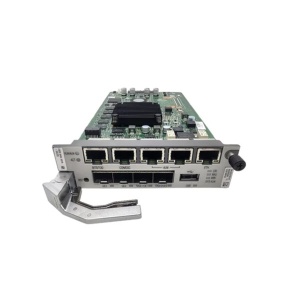
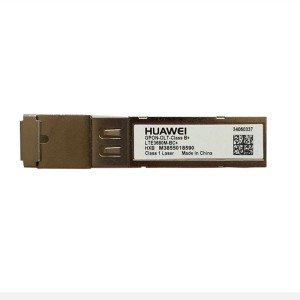
Analyzing the synergy between high-sensitivity 80km ZR transceivers and high-capacity PON backhaul topologies.
The telecommunications industry is undergoing a structural paradigm shift driven by exponentially growing bandwidth demands, 5G wireless small cell densification, and cloud edge convergence. While Passive Optical Networks (PON)—ranging from legacy GPON and EPON to modern symmetrical XGS-PON and 25GS-PON—dominate last-mile connectivity, the aggregation and backhaul of these distributed systems present critical optical reach and attenuation challenges. Integrating SFP 10G 80 km (commonly referred to as 10GBASE-ZR SFP+) transceivers into passive optical network infrastructure enables operators to bridge metropolitan central offices directly with distributed remote distribution hubs without deploying expensive active repeaters or intermediate optical amplifiers.
Enables operators to collapse legacy local exchanges into centralized, energy-efficient edge data centers spanning up to 80 km over standard G.652 single-mode fiber.
Delivers an optical budget of 23 dB to 26 dB using cooled 1550nm EML transmitters and ultra-sensitive APD photodetectors, overcoming passive splitter and insertion losses.
Eliminates the operational overhead, thermal challenges, and power footprint of intermediate Erbium-Doped Fiber Amplifiers (EDFA) across suburban-to-rural links.
Operating optical transceivers at 10 Gigabits per second over an 80-kilometer span requires precise mitigation of physical fiber impairments, primarily chromatic dispersion and optical power attenuation. Standard single-mode fiber (ITU-T G.652.D) exhibits an attenuation coefficient of approximately 0.19 to 0.22 dB/km at the 1550nm C-band transmission window. Across an 80 km run, cumulative fiber attenuation alone accounts for roughly 16 to 17.6 dB. When factorizing optical distribution frames (ODF), splice losses, passive filter insertions (such as coarse or dense wavelength multiplexers), and environmental aging margins (typically 3 dB), the total link loss commonly exceeds 22 dB.
The SFP 10G 80 km transceiver utilizes an Electro-Absorption Modulated Laser (EML) operating at 1550nm, paired with an Avalanche Photodiode (APD) receiver. While traditional direct-modulated lasers (DML) suffer from excessive frequency chirp—causing optical pulse broadening and severe inter-symbol interference (ISI) after merely 20 to 40 km—cooled EML assemblies maintain narrow spectral line-widths. This optical architecture provides a chromatic dispersion tolerance up to 1600 ps/nm, which aligns perfectly with standard single-mode fiber dispersion metrics (17 ps/(nm·km) × 80 km = 1360 ps/nm), allowing uncompensated transmission across the full 80 km distance.
While the passive optical network itself employs point-to-multipoint (P2MP) topologies (such as GPON Class C++ or XGS-PON N1/N2 classes) between the Optical Line Terminal (OLT) and the Optical Network Units (ONUs), 10G 80km SFP+ modules serve essential roles across the supporting infrastructure:
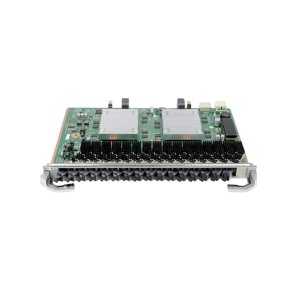
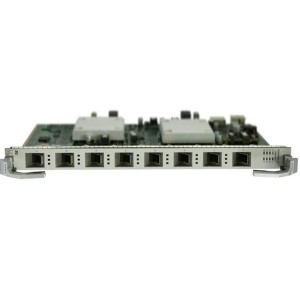
A. Long-Distance OLT Uplink Aggregation: Modern FTTH networks frequently deploy modular OLT chassis (utilizing service boards such as NXED, FLHF, or MPSA) in decentralized, unmanned outdoor cabinets or street shelters closer to residential subscribers. To aggregate traffic from multiple 16-port GPON or XGS-PON interface cards back to the core IP/MPLS edge router located in a regional switching center, operators install 10G 80km transceivers directly into the OLT uplink slots, consolidating multiple gigabits of user traffic over point-to-point links spanning 60 to 80 km without active regeneration sites.
B. Rural Broadband Extension via WDM-PON: Rural fiber deployments present severe economic challenges due to the low density of end-users per kilometer of deployed optical cable. By pairing 10G 80km optics—especially CWDM or DWDM wavelength-tuned SFP+ modules—with passive optical splitters and multiplexers, operators can establish passive cross-connects extending coverage into remote communities. This design eliminates active climate-controlled aggregation nodes along the route, driving capital expenditures down by as much as 45%.
C. 5G Wireless XHaul Convergence over Existing PON Assets: Operators globally are converging mobile xHaul (fronthaul, midhaul, and backhaul) onto pre-existing FTTH infrastructure. The 10G 80km SFP+ transceivers provide the dedicated point-to-point reach needed to route aggregated 5G Common Public Radio Interface (eCPRI) and Open RAN signals from distributed cell sites back to centralized Baseband Unit (BBU) or Distributed Unit (DU) pools, leveraging the same passive fiber rights-of-way deployed for fiber-to-the-home networks.
Evaluating physical layer parameters between standard 10G optical transceivers deployed in carrier aggregation and PON environments.
| Transceiver Form Factor | Operating Wavelength | Transmitter Type | Receiver Sensitivity | Power Budget | Max Transmission Reach | Target PON Role |
|---|---|---|---|---|---|---|
| 10GBASE-LR SFP+ | 1310 nm | DFB Laser | -14.4 dBm (PIN) | 6.0 dB - 9.4 dB | 10 km | Intra-datacenter / Local OLT Uplink |
| 10GBASE-ER SFP+ | 1550 nm | Cooled EML | -15.8 dBm (PIN) | 15.0 dB - 16.0 dB | 40 km | Suburban OLT Aggregation |
| 10GBASE-ZR SFP+ (80km) | 1550 nm (or CWDM/DWDM) | Cooled High-Power EML | -24.0 dBm (APD) | 23.0 dB - 26.0 dB | 80 km | Long-Haul PON Aggregation / Rural Backhaul |
| GPON OLT Class C++ | 1490nm Tx / 1310nm Rx | DFB / APD Diplexer | -32.0 dBm (APD) | 32.0 dB (ODN Budget) | 20 km (Split-limited) | Last-Mile Distribution (1:64 / 1:128 Split) |
| XGS-PON OLT N2 Class | 1577nm Tx / 1270nm Rx | EML / APD Diplexer | -29.5 dBm (APD) | 31.0 dB (ODN Budget) | 20 km (Split-limited) | 10G Symmetrical FTTH/FTTB Last-Mile |
How edge compute virtualization and optical component innovation are reshaping passive optical networks.
The global telecommunications market is actively replacing specialized, proprietary central office chassis with Open CORD (Central Office Re-architected as a Datacenter) and Virtualized OLT (vOLT) frameworks. In this transformed landscape, traditional OLT hardware functions are decoupled into white-box disaggregated transceivers and software-defined networking (SDN) controllers hosted on standard commercial-off-the-shelf (COTS) edge servers. In this topology, the demand for 10G 80km SFP+ transceivers has surged: operators no longer distribute computing intelligence across hundreds of small exchanges. Instead, raw optical channels are piped from remote passive optical splitters over distances up to 80 km directly into high-capacity edge datacenters housing centralized switching fabrics.
This structural transformation yields immense operational dividends. By eliminating intermediate switching layers, latency is preserved for time-critical applications including industrial automation, augmented reality services, and real-time gaming. Furthermore, the power consumption profile of 10G 80km transceivers has significantly decreased over consecutive hardware iterations; modern digital signal processing (DSP) optimizations and low-power Transimpedance Amplifiers (TIAs) enable current-generation 80km SFP+ modules to operate under 1.5 Watts, safeguarding OLT chassis thermal management and rack density.
Passive optical infrastructures are inherently challenging to troubleshoot due to the unpowered, branch-like nature of optical splitters and fiber splices. Modern SFP 10G 80 km transceivers incorporate SFF-8472 compliant Digital Optical Monitoring (DOM / DDM) telemetry, providing real-time measurements of:
• Optical Transmit Power (dBm)
• Optical Receive Power (dBm)
• Laser Bias Current (mA)
• Transceiver Operating Temperature (°C)
• Internal Supply Voltage (V)
When feeding this continuous telemetry stream into AI-driven network management platforms, telecommunications engineers can predict physical link degradations long before service disruption occurs. Gradual increases in laser bias current, for instance, signal EML aging, while sudden drops in received APD power indicate micro-bending, macro-bending, or water ingress along the 80 km passive fiber trunk. These automated preventative diagnostics lower operational truck-rolls and optimize fiber service-level agreements (SLAs).
Global leader in carrier-grade optical access products, fiber distribution terminals, and modular high-speed OLT switching systems.
Established in 2006, Wenzhou AIOU Optical Communication Co., Ltd. is a professional high-tech enterprise dedicated to the full industrial chain of optical network access solutions, covering research and development, manufacturing, sales, and after-sales service. We focus on delivering cutting-edge passive optical network (PON) products, including EPON, GPON, and XPON series, which are carefully tailored to meet the diverse needs of global customers in different regions and industries. With a firm commitment to independent innovation, we have built a strong R&D team composed of senior engineers with years of industry experience, holding multiple core technology patents and forming a comprehensive industrial chain, thus effectively serving various sectors such as operator networks, government and enterprise information systems, smart parks, and home broadband access.
Our complete product line covers OLT (Optical Line Terminal), ONU (Optical Network Unit), high-performance optical modules, and network switching equipment, supporting access rates ranging from 10/100M to 10G. These solutions are characterized by high performance, stable reliability, low latency, and easy deployment, perfectly aligning with customers’ demands for secure, stable, and high-speed communication networks. All our products have passed strict CE certification, as well as other international quality certifications, and are exported to more than 20 countries and regions across South America, Africa, Eastern Europe, Southeast Asia, and the Middle East, winning wide recognition from global partners for their superior quality and cost-effectiveness.
We operate a standardized 2,000-square-meter production zone equipped with advanced automated production and testing equipment, where we strictly adhere to ISO9001 quality management systems, CCC, and CE standards to ensure the consistency and reliability of each product. Our core mission is to exceed customer expectations by providing premium quality products, efficient and thoughtful after-sales services, and industry-leading technical support, continuously driving technological innovation and development in the global optical network infrastructure field.
Explore our certified OLT service boards, optical transceivers, and high-density line cards powering modern broadband networks worldwide.