Wenzhou AIOU Optical Communication Co., Ltd.



Leave Your Message
-
 Get Your Quote
-
 Email
Deploy high-capacity OLT interface boards and optical transceivers designed to aggregate FTTH and telecom core networks over extended distances.
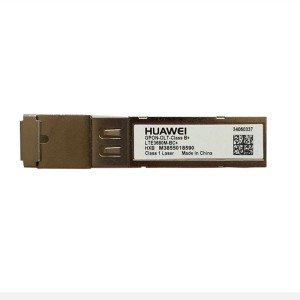
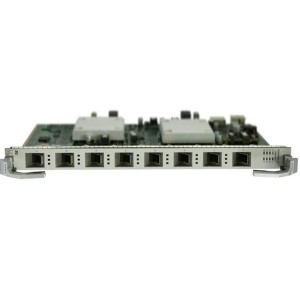
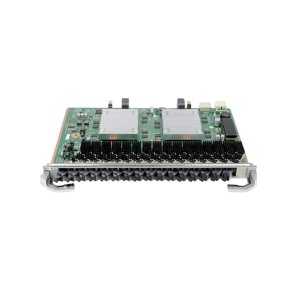
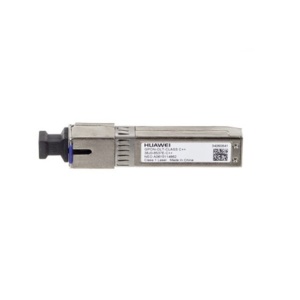
The global telecommunications landscape is undergoing a massive transformation, driven by the exponential demand for high-speed internet, cloud computing, and 5G mobile networks. For Internet Service Providers (ISPs) and telecom operators, the challenge lies in scaling the optical access and aggregation networks cost-effectively over long distances. Here, the SFP 10G 80km optical transceiver (often referred to as 10G ZR SFP+) serves as an indispensable workhorse.
While 100G and 400G coherent optical solutions dominate the ultra-long-haul core transport networks, 10G remains the sweet spot for regional access, metropolitan distribution, and mid-mile transport layers. Upgrading whole networks to coherent technology is capital-intensive. Consequently, ISPs rely heavily on SFP 10G 80km modules to span distances up to 80 kilometers without requiring expensive inline optical amplifiers (EDFA) or dispersion compensation equipment, greatly optimizing Capital Expenditure (CapEx) and Operational Expenditure (OpEx).
With the global surge in Fiber-to-the-Home (FTTH) and Fiber-to-the-Building (FTTB) deployments, central offices and OLT (Optical Line Terminal) aggregation points are being pushed further into suburban and rural areas. Connecting these remote hubs back to the metropolitan IP core requires robust, long-distance, high-throughput links where the SFP 10G 80km transceiver shines as the primary physical layer interface.
Understanding how the SFP 10G 80km optical module integrates into daily telecom operations and network architectures.
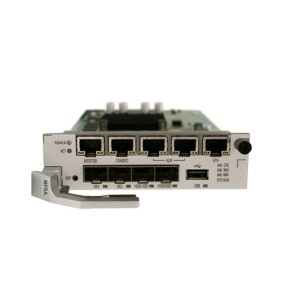
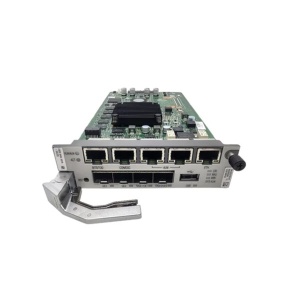
In FTTH deployments, high-density OLT service boards like the MPSA 10G OLT Service Board or the NXED 10G OLT Service Board aggregate traffic from thousands of GPON/EPON home optical network units (ONUs). This massive localized bandwidth must be funneled back to the ISP's regional point of presence (PoP). By utilizing SFP 10G 80km transceivers in the OLT uplink ports, operators can bridge the physical distance between suburban neighborhoods and metropolitan core routers directly, avoiding intermediate signal-boosting stations.
Metropolitan networks are often structured in fiber rings to provide redundancy. Nodes on these rings can span tens of kilometers around a city or county. SFP 10G 80km modules enable stable, high-speed connections between these distributed nodes. When integrated with Coarse or Dense Wavelength Division Multiplexing (CWDM/DWDM), they allow ISPs to scale fiber capacity exponentially over the same 80km link, maximizing existing fiber assets.
As mobile carriers expand 4G LTE and 5G coverage, base stations are deployed in remote, rural, or industrial park locations. The backhaul network must transport voice, video, and data back to the Centralized Radio Access Network (C-RAN) hub or core switch. SFP 10G 80km modules provide the necessary reach and bandwidth to connect remote cell towers back to the main switching center, ensuring low latency and high reliability even in challenging physical environments.
Large corporate campuses, government bodies, and utility companies often require dedicated, secure private networks to connect remote offices, research facilities, or power substations. A dedicated dark fiber link lit by SFP 10G 80km transceivers offers a high-speed, secure, and completely isolated communication network capable of handling latency-sensitive industrial control data, high-definition video surveillance, and secure database replication.
Achieving a reliable 10 Gbps data rate over 80 kilometers of standard single-mode optical fiber (G.652) requires advanced optoelectronic components. Standard short-reach transceivers utilize 850nm or 1310nm lasers, which suffer from high attenuation and dispersion over distance. The SFP 10G 80km transceiver overcomes these limitations through specialized engineering:
1. 1550nm EML Transmitter: The 1550nm wavelength corresponds to the minimum attenuation window of silica glass fiber (typically 0.2 dB/km). To combat chromatic dispersion—the spreading of light pulses as they travel down the fiber—the module uses an Electro-absorption Modulated Laser (EML). EMLs exhibit very low "chirp" (wavelength shifting during modulation), preventing signal degradation over the 80km span.
2. High-Sensitivity APD Receiver: Standard PIN photodetectors are insufficient for long-haul links due to signal attenuation. The SFP 10G 80km module employs an Avalanche Photodiode (APD) receiver. APD detectors use internal multiplication to amplify the incoming optical signal, achieving high receiver sensitivity (often down to -23 dBm or lower), allowing it to read faint signals that have traveled through 80km of fiber.
3. Digital Diagnostic Monitoring (DDM/DOM): Operating long-distance links requires continuous health monitoring. DDM provides real-time tracking of critical transceiver parameters, including optical output power, optical receiver power, temperature, laser bias current, and supply voltage. This capability allows network administrators to predict link degradation and perform preventive maintenance before outages occur.
| Form Factor | SFP+ (Small Form-factor Pluggable Plus) |
| Data Rate | 8.5 Gbps to 11.3 Gbps (Supports 10G Ethernet/OC192) |
| Wavelength | 1550nm (C-band) |
| Max Distance | 80 km (over Single-Mode Fiber) |
| Transmitter Type | EML (Electro-absorption Modulated Laser) |
| Receiver Type | APD (Avalanche Photodiode) |
| Optical Budget | 23 dB to 24 dB typical |
| Diagnostics | DDM / DOM Compliant (SFF-8472) |
How the optical access landscape is evolving to meet next-generation requirements.
As 10G GPON (XG-PON/XGS-PON) becomes the standard for residential broadband, core aggregate links are preparing for the transition to 25G and 50G. While 10G 80km links remain highly popular, hardware manufacturers are developing 25G/50G long-haul transceivers utilizing similar EML and APD technologies to allow seamless bandwidth scaling over existing fiber infrastructures.
To maximize fiber efficiency, operators are moving away from fixed-wavelength transceivers toward Tunable SFP+ modules. A tunable 10G 80km transceiver can adjust its wavelength to match specific DWDM channels. This flexibility simplifies inventory management and enables dense multiplexing, allowing dozens of 10G channels to run simultaneously over a single fiber span.
Silicon photonics technology integrates optical components onto silicon chips, drastically reducing manufacturing costs and power consumption. In the future, long-haul transceivers will leverage silicon photonics to offer higher reliability, smaller footprints, and lower thermal output, aligning with green telecom initiatives.
Modern telecom networks rely on AI-driven telemetry. Advanced optical modules will feature enhanced DDM reporting, allowing predictive software to identify fiber bends, degradation, or micro-fractures along an 80km route, reducing network downtime and improving service level agreements (SLAs).
Established in 2006, Wenzhou AIOU Optical Communication Co., Ltd. is a professional high-tech enterprise dedicated to the full industrial chain of optical network access solutions, covering research and development, manufacturing, sales, and after-sales service. We focus on delivering cutting-edge passive optical network (PON) products, including EPON, GPON, and XPON series, which are carefully tailored to meet the diverse needs of global customers in different regions and industries. With a firm commitment to independent innovation, we have built a strong R&D team composed of senior engineers with years of industry experience, holding multiple core technology patents and forming a comprehensive industrial chain, thus effectively serving various sectors such as operator networks, government and enterprise information systems, smart parks, and home broadband access.
Our complete product line covers OLT (Optical Line Terminal), ONU (Optical Network Unit), high-performance optical modules, and network switching equipment, supporting access rates ranging from 10/100M to 10G. These solutions are characterized by high performance, stable reliability, low latency, and easy deployment, perfectly aligning with customers’ demands for secure, stable, and high-speed communication networks. All our products have passed strict CE certification, as well as other international quality certifications, and are exported to more than 20 countries and regions across South America, Africa, Eastern Europe, Southeast Asia, and the Middle East, winning wide recognition from global partners for their superior quality and cost-effectiveness.
We operate a standardized 2,000-square-meter production zone equipped with advanced automated production and testing equipment, where we strictly adhere to ISO9001 quality management systems, CCC, and CE standards to ensure the consistency and reliability of each product. Our core mission is to exceed customer expectations by providing premium quality products, efficient and thoughtful after-sales services, and industry-leading technical support, continuously driving technological innovation and development in the global optical network infrastructure field.
Explore our comprehensive range of high-speed OLT service boards and high-power optical modules engineered for global telecom deployments.