Wenzhou AIOU Optical Communication Co., Ltd.



Leave Your Message
-
 Get Your Quote
-
 Email
Engineered specifically for modular Optical Line Terminal expansion projects requiring multi-gigabit throughput, uncompromising reliability, and seamless terminal orchestration.
Understanding the technological drivers, CAPEX constraints, and edge bandwidth demands dictating the trajectory of global fiber-to-the-home and enterprise fiber rollouts.
Over the past half-decade, fixed broadband architectures have undergone a tectonic transformation. Where legacy copper, VDSL, and hybrid-fiber coaxial (HFC) networks once dominated secondary metros and rural catchments, the relentless escalation of symmetrical bandwidth consumption has exposed their systemic limits. Modern internet exchanges now face continuous multi-gigabit traffic spikes catalyzed by distributed remote workspaces, cloud-native enterprise enterprise resource planning (ERP) suites, 4K/8K real-time interactive media streams, augmented virtual environments, and millions of connected IoT endpoints. In response, Tier-1 and alternative telecom operators (AltNets) have accelerated their migration toward Gigabit Passive Optical Network (GPON) and 10G-PON architectures.
Central to this structural evolution is the Optical Line Terminal (OLT) expansion project. Upgrading or deploying new OLT infrastructures is not merely about stacking chassis in central offices or outdoor aggregate cabinets; it represents a comprehensive topological redesign. Network architects are prioritizing high split ratios (up to 1:64 and 1:128), extended reach optical link budgets (Class B+ and Class C+ optics), and energy-conscious modular line cards. However, the true commercial profitability of an OLT expansion is realized at the optical demarc point: the Optical Network Unit (ONU) or Optical Network Terminal (ONT). Deploying high-performance ONU GPON WiFi customer premises equipment (CPE) bridges the high-velocity optical core with user-facing wireless domains, neutralizing the traditional Wi-Fi bottleneck that plagued earlier FTTx phases.
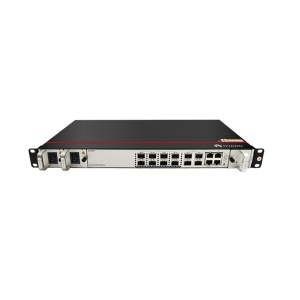
Modern OLT rollouts rely on localized box-type OLTs (such as 4-port and 8-port compact platforms) deployed in street cabinets, reducing feeder fiber consumption while serving hundreds of WiFi ONUs directly.
Standardized optical management and control interfaces allow zero-touch automated subscriber provisioning across multi-vendor ONU fleets, radically cutting carrier operational expenditure (OPEX).
Dynamic Bandwidth Allocation (DBA) paired with Wi-Fi WMM priority queues guarantees sub-millisecond latencies for VoIP, mission-critical IoT telemetry, and SLA-backed commercial links.
Examining downstream 1490nm and upstream 1310nm optical link budgets, interface board switching fabrics, and edge RF propagation mechanics.
The GPON protocol framework, defined under ITU-T G.984.x recommendations, leverages a single optical strand across a passive optical distribution network (ODN) by utilizing wavelength division multiplexing (WDM). Downstream traffic is continuously broadcast at a nominal wavelength of 1490 nm with a line rate of 2.488 Gbps, secured via AES-128 payload encryption to prevent eavesdropping across shared fiber branches. Upstream traffic utilizes a 1310 nm wavelength transmitting at 1.244 Gbps via Time Division Multiple Access (TDMA), orchestrated down to the microsecond level by the OLT's Dynamic Bandwidth Allocation (DBA) engine.
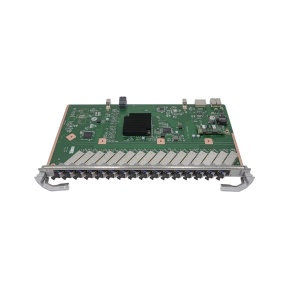
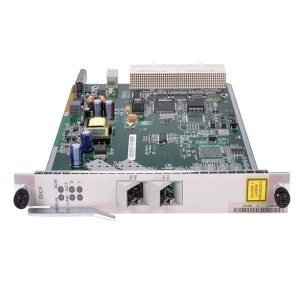
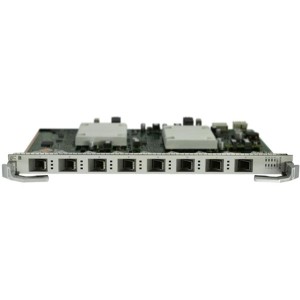
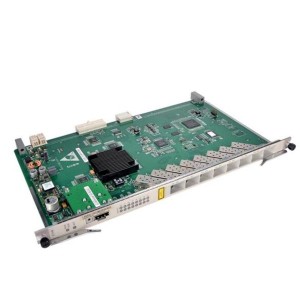
When executing an Optical Line Terminal expansion project, the insertion of dedicated interface boards—such as the OXHD, ETHB, GPF, and GICF series—expands the core backplane switching capacity while multiplying PON port availability. Each individual PON port interfaces with passive splitters configured in tree-and-branch or cascaded topologies. At the termination endpoint, the ONU GPON WiFi transceives optical pulses via onboard BOSA (Bidirectional Optical Sub-Assembly) modules, instantly transforming photonic signals into high-speed Layer 2 and Layer 3 Ethernet packets forwarded into dual-band Wi-Fi transmitters.
| Parameter Dimension | Optical Line Terminal (OLT Infrastructure) | Optical Network Unit (ONU GPON WiFi Endpoint) |
|---|---|---|
| Optical Wavelengths | Tx: 1490 nm (Continuous Downstream), Rx: 1310 nm (Burst Upstream) | Rx: 1490 nm (Downstream Reception), Tx: 1310 nm (Burst TDMA Transmission) |
| Optical Power Budget | Class B+ (+1.5 to +5 dBm) / Class C+ (+3 to +7 dBm) Output | High sensitivity APD receiver (-28 dBm to -30 dBm minimum threshold) |
| Line Interface Density | 4-Port / 8-Port / 16-Port SFP cages per modular board | Single SC/UPC or SC/APC optical receptacle with gigabit Ethernet LANs |
| Wireless Interface Protocol | Backplane switching fabric with Layer 3 IP multicast routing | Dual-band 2.4GHz & 5GHz Wi-Fi (802.11ac Wave 2 / Wi-Fi 6 OFDMA) |
| Management Protocols | SNMP v2/v3, CLI, Telnet, NETCONF, Unified Element Management (EMS) | ITU-T G.988 OMCI, TR-069 CWMP, Web GUI, TR-181 Device Data Model |
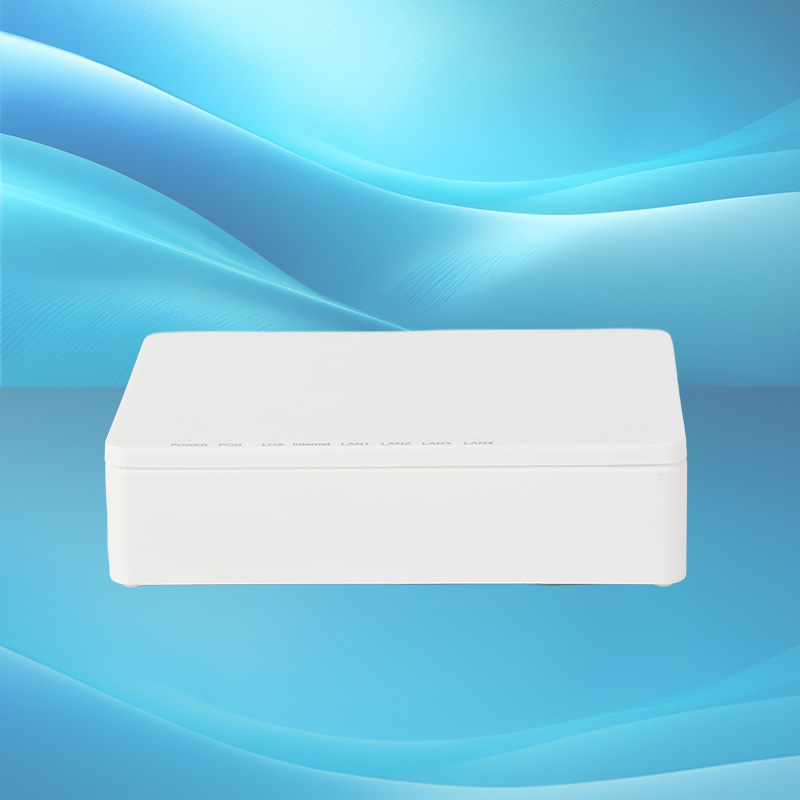
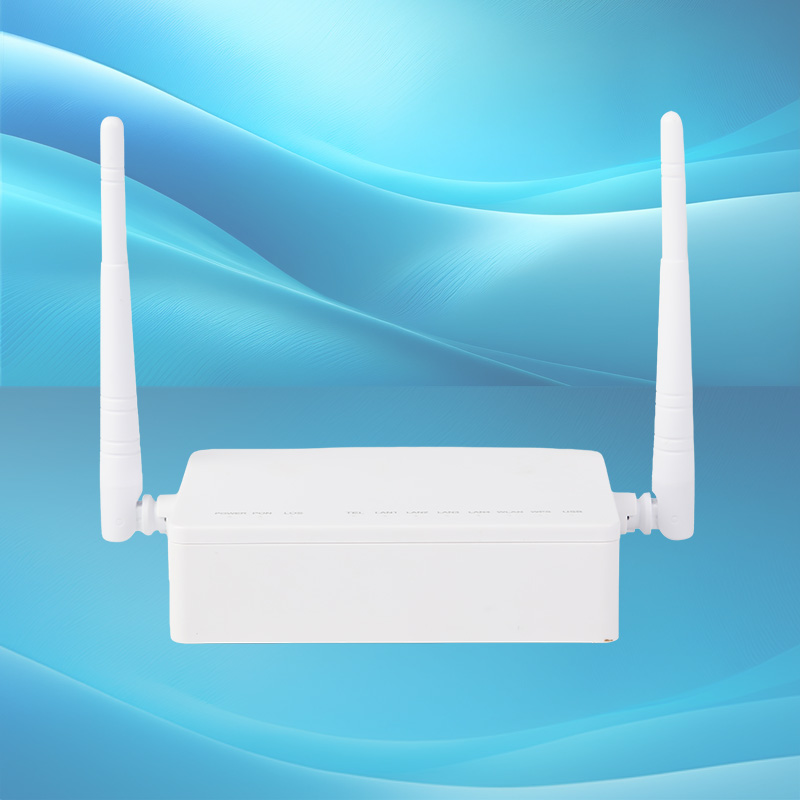
Deploying optical fiber directly to the premises becomes commercially counterproductive if the end-user's wireless delivery fails to match line capacity. Older single-band 2.4 GHz ONUs frequently suffered from spectral saturation, adjacent channel interference, and attenuation across reinforced concrete walls, restricting practical throughput to under 50 Mbps despite a gigabit-capable optical feed. Modern ONU GPON WiFi units (such as the GM232 XPON ONU and F663AV9 / AI663AV9 platforms) resolve this friction by integrating dual-band radio frequency architectures.
By delegating latency-sensitive high-bandwidth traffic—including multi-gigabit downloads, remote desktop rendering, and video conferences—to the 5 GHz band via beamforming and 2x2 or 4x4 MU-MIMO arrays, these ONUs guarantee wire-speed distribution over the air. Concurrently, legacy IoT devices, smart thermostats, and ambient telemetry are steered to the 2.4 GHz band. This RF isolation preserves the pristine quality of service negotiated upstream through the OLT's interface boards, preserving carrier-grade SLAs end-to-end.
Tailored topologies demonstrating how integrated OLT and ONU GPON WiFi hardware solve complex commercial, residential, and industrial connectivity challenges.
In high-density apartment blocks and master-planned residential estates, legacy copper riser cables create chronic maintenance bottlenecks. Utilizing compact OLT units like the EA5801E-GP08-H2 in the building's central telecommunications room enables network operators to route single-mode micro-armored fiber optic vertical risers to every living unit. By placing F663AV9 / AI663AV9 GPON ONUs inside each apartment, operators eliminate separate wireless routers, delivering dual-band Wi-Fi coverage natively. Multi-SSID configurations allow property managers to isolate resident broadband, smart building management IoT (intercoms, access control, energy meters), and guest access across distinct VLANs mapped directly to OLT uplink boards like the ETHB.
Modern manufacturing facilities and logistics warehouses demand immune-to-electromagnetic-interference (EMI) networking that spans sprawling multi-hectare footprints. Traditional twisted-pair Ethernet cables are capped at a 100-meter structural distance limit. Fiber to the Office/Machine (FTTO/FTTM) architectures leveraging GPF and OXHD service boards housed in central OLT frames bridge up to 20 kilometers of distribution fiber without active repeaters. Ruggedized GM232 XPON ONUs with Wi-Fi functionality provide instant, deterministic wireless connectivity for automated guided vehicles (AGVs), real-time machine vision inspection systems, and mobile industrial handheld scanners across the plant floor.
Rural telecommunications expansion projects face challenging unit economics characterized by low subscriber densities and extended loop lengths. Deploying monolithic, power-hungry chassis OLTs in remote hubs is cost-prohibitive. Compact 4-port platforms such as the EA5801E-GP04-H2 deployed inside pole-mounted or street-level weatherized outdoor enclosures resolve this hurdle. Operating at low power consumption and utilizing high-gain optical modules, these systems broadcast optical feeds over 15 to 20 kilometers. At subscriber residences, cost-effective GPON WiFi ONUs establish unified whole-home broadband, allowing regional carriers to achieve rapid ROI and deliver universal connectivity.
How the interplay between XGS-PON upgrades, Wi-Fi 7 edge integration, and autonomous optical line terminal diagnostics is reshaping the telecommunication ecosystem.
As subscribers consume higher burst capacities, forward-thinking network operators are designing their OLT expansion projects with non-disruptive migration pathways. The coexistence of standard GPON and symmetrical 10-Gigabit XGS-PON over the identical physical optical distribution network is achieved using WDM1r filtering modules or integrated Combo-PON interface boards. This allows legacy ONU GPON WiFi units to operate seamlessly alongside newly introduced 10G optical terminals on the same feeder fibers. Telecom providers can gradually upsell premium enterprise tiers to multi-gigabit connections while preserving their capital investments in existing GPON ONU terminal hardware.
Simultaneously, the convergence of optical access with Wi-Fi 7 (802.11be) introduces 320 MHz channel widths, 4096-QAM modulation, and Multi-Link Operation (MLO) at the optical network unit boundary. This synergy ensures that ultra-low optical line latencies provided by carrier OLTs are preserved across wireless local loops, catering to latency-intolerant enterprise cloud applications and mission-critical smart grid tele-protection schemes.
The operational overhead of pinpointing microscopic micro-bends, connector contamination, and optical power degradation across thousands of distributed ONU drops has historically driven up maintenance costs. Modern OLT management platforms are embedding artificial intelligence and machine learning telemetry models. By cross-analyzing real-time optical power received signal strength indicators (RSSI), burst-mode bit error ratios (BER), and ambient temperature fluctuations reported by ONU GPON WiFi units through OMCI communication paths, predictive maintenance suites can locate impending fiber failures before subscriber outages materialize. This automated intelligence lowers mean time to repair (MTTR) by up to 60 percent across expansive network territories.
Established in 2006, Wenzhou AIOU Optical Communication Co., Ltd. is a professional high-tech enterprise dedicated to the full industrial chain of optical network access solutions, covering research and development, manufacturing, sales, and after-sales service. We focus on delivering cutting-edge passive optical network (PON) products, including EPON, GPON, and XPON series, which are carefully tailored to meet the diverse needs of global customers in different regions and industries. With a firm commitment to independent innovation, we have built a strong R&D team composed of senior engineers with years of industry experience, holding multiple core technology patents and forming a comprehensive industrial chain, thus effectively serving various sectors such as operator networks, government and enterprise information systems, smart parks, and home broadband access.
Our complete product line covers OLT (Optical Line Terminal), ONU (Optical Network Unit), high-performance optical modules, and network switching equipment, supporting access rates ranging from 10/100M to 10G. These solutions are characterized by high performance, stable reliability, low latency, and easy deployment, perfectly aligning with customers’ demands for secure, stable, and high-speed communication networks. All our products have passed strict CE certification, as well as other international quality certifications, and are exported to more than 20 countries and regions across South America, Africa, Eastern Europe, Southeast Asia, and the Middle East, winning wide recognition from global partners for their superior quality and cost-effectiveness.
We operate a standardized 2,000-square-meter production zone equipped with advanced automated production and testing equipment, where we strictly adhere to ISO9001 quality management systems, CCC, and CE standards to ensure the consistency and reliability of each product. Our core mission is to exceed customer expectations by providing premium quality products, efficient and thoughtful after-sales services, and industry-leading technical support, continuously driving technological innovation and development in the global optical network infrastructure field.
Browse our industry-proven optical line terminal interfaces, box-type OLTs, and high-throughput ONU GPON WiFi hardware deployed across carrier and enterprise networks worldwide.