Wenzhou AIOU Optical Communication Co., Ltd.



Leave Your Message
-
 Get Your Quote
-
 Email
In the era of smart cities, automated industries, and advanced security systems, video surveillance has evolved from a luxury to a critical infrastructure element. High-definition (HD) cameras, thermal sensors, and artificial intelligence (AI)-driven analytics require robust, ultra-fast, and highly reliable data highways. Traditional copper cabling (such as Cat5e or Cat6 Ethernet) falls short when faced with long-distance demands, electromagnetic interference, and the massive bandwidth consumption of multiple 4K or 8K streams. This is where ONU GPON WiFi for CCTV camera fiber optic transmission steps in as the industry-standard solution.
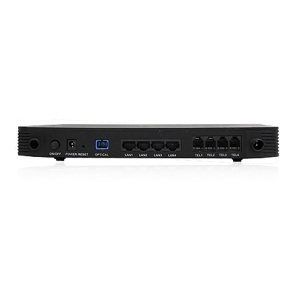
By leveraging Gigabit Passive Optical Networks (GPON) alongside high-speed wireless connectivity (WiFi 6/5), modern security architectures can span vast distances without signal degradation. An Optical Network Unit (ONU) acts as the bridge, converting optical signals into standard Ethernet and wireless interfaces, enabling flexible, cost-effective, and scalable security deployments.
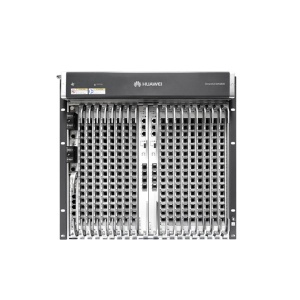
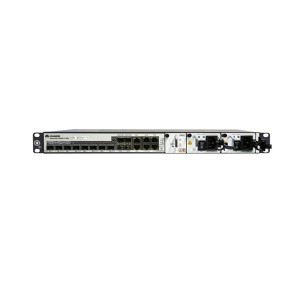
GPON is a point-to-multipoint (P2MP) access mechanism defined by the ITU-T G.984 standard. Unlike active optical networks that require powered switches in the field, GPON uses passive optical splitters to distribute a single optical fiber from the Central Office (CO) or control room to multiple endpoints. The core components of this system include:
In a CCTV application, the GPON ONU with integrated WiFi offers a hybrid transmission path. IP cameras can connect directly to the ONU via physical Gigabit Ethernet ports, or wirelessly via dual-band WiFi. This minimizes physical cabling challenges in complex environments like historical buildings, high-altitude street poles, and expansive industrial yards.
"GPON technology allows a single fiber to support up to 64 or 128 ONUs, drastically reducing physical cabling costs while maintaining a downstream speed of 2.488 Gbps and upstream speed of 1.244 Gbps."
Integrating WiFi directly into a GPON ONU solves the "last-meter" deployment bottleneck. In many outdoor and industrial scenarios, running physical Ethernet cables from the fiber junction box to the camera is labor-intensive and structurally challenging. WiFi-enabled ONUs provide several distinct advantages:
By using the WiFi capabilities of the ONU (such as AX3000 Wi-Fi 6), multiple cameras in the vicinity can stream their feeds wirelessly to a single ONU. This eliminates the need for external wireless access points, PoE injectors, and complex wiring, keeping the installation clean and reducing hardware costs.
With the advent of Wi-Fi 6 (802.11ax), wireless transmission is no longer a bottleneck. Featuring technologies like OFDMA (Orthogonal Frequency-Division Multiple Access) and MU-MIMO (Multi-User, Multiple-Input, Multiple-Output), Wi-Fi 6 ONUs can handle multiple high-bitrate video streams simultaneously with minimal latency and zero packet loss.
In locations like construction sites, logistics hubs, or temporary public events, security cameras often need to be relocated. A WiFi-enabled ONU allows security teams to reposition cameras within the wireless coverage area without re-laying fiber optic lines or Ethernet cables.
Modern cities require thousands of cameras for traffic control, license plate recognition, and public safety. These cameras are distributed across miles of highways and urban intersections. Standard copper networks cannot transmit data beyond 100 meters. GPON, however, easily covers distances up to 20 kilometers.
At each intersection, a GPON ONU is housed in a weatherproof enclosure. Street-level traffic cameras connect to the ONU. For cameras mounted on nearby light poles where fiber cannot be easily routed, the ONU's high-gain WiFi antennas act as the wireless bridge, transmitting crystal-clear feeds back to the central OLT and monitoring center.
Industrial environments are plagued by electromagnetic interference (EMI) generated by heavy machinery, high-voltage lines, and generators. Copper cables act as antennas for this interference, leading to distorted video feeds and network drops. Fiber optic cables, being made of glass, are completely immune to EMI.
By deploying GPON ONUs across the plant, companies ensure stable video transmission. WiFi-enabled ONUs also provide local wireless coverage, allowing maintenance personnel to view live camera feeds on mobile tablets or connect portable inspection cameras to the network in real-time.
In modern high-rise buildings and residential estates, fiber-to-the-home (FTTH) and security networks are increasingly integrated. Multi-play ONUs (supporting internet, VoIP, CATV, and WiFi) can simultaneously handle building security. CCTV cameras in corridors, elevators, and parking garages connect to the local ONUs, which route the surveillance traffic to a dedicated VLAN (Virtual Local Area Network) managed by the building's security team, ensuring data segregation and high-level security.
The global market for fiber optic transmission in security is experiencing rapid growth. Several key trends are shaping the future of GPON ONU deployments for CCTV:
Unlike standard web browsing, video surveillance traffic is continuous, bandwidth-heavy, and highly sensitive to latency and packet loss. To optimize GPON WiFi ONUs for CCTV, several network configurations must be implemented:
OLTs use DBA to assign bandwidth to different ONUs dynamically. For CCTV networks, ONUs connecting to high-priority cameras (such as those monitoring critical entry points) should be assigned a guaranteed minimum bandwidth (Assigned Bandwidth) to prevent video stuttering during peak network utilization.
Video packets must be prioritized over general data traffic. By tagging video streams with specific CoS (Class of Service) or DSCP (Differentiated Services Code Point) values, the GPON network ensures that security feeds bypass congestion points ahead of standard internet traffic.
When multiple security monitors or recording servers (NVRs) need to view the same camera feed, unicast transmission would duplicate the bandwidth usage. Enabling IGMP (Internet Group Management Protocol) Snooping allows the GPON OLT and ONU to deliver a single video stream to the splitter, which is then distributed only to the active receivers, saving massive amounts of bandwidth.
Security networks are prime targets for cyberattacks and physical tampering. GPON networks offer inherent security benefits because fiber optic lines are incredibly difficult to tap without detection. However, the wireless segment (WiFi) and the ONU itself must be secured:
The integration of ONU GPON WiFi for CCTV camera fiber optic transmission represents the pinnacle of modern security network engineering. By combining the immense bandwidth and long-distance capabilities of fiber optics with the flexibility of high-speed WiFi, security integrators can build robust, future-proof, and cost-effective surveillance networks. Whether for smart cities, industrial complexes, or commercial properties, this hybrid approach ensures that critical security data is transmitted safely, quickly, and without interruption.

Our optimized supply chain ensures fast manufacturing and turnaround times for large-scale security projects.

We continuously innovate our GPON and WiFi firmware to support high-bitrate CCTV stream management.

Customize ONU casing, firmware branding, and port configurations to match your specific surveillance project requirements.

Our ONUs are fully compatible with major OLT brands (Huawei, ZTE, Nokia) and mainstream IP camera brands.

Get dedicated 24/7 technical support for network configuration, troubleshooting, and firmware upgrades.

Long-term partnerships with component manufacturers guarantee uninterrupted production and stock availability.
Providing long-distance, high-bandwidth optical backhauls for traffic monitoring, facial recognition cameras, and public safety systems across urban centers.
Deploying EMI-immune fiber networks in manufacturing facilities, chemical plants, and mines to ensure uninterrupted, high-definition camera feeds.
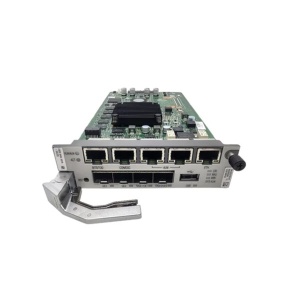
Integrating GPON OLTs and high-density service boards to manage massive data streams between 5G microcells, edge data centers, and control rooms.