






Exploring the Diverse Application Scenarios of Fiber Optic Connectors
Against the backdrop of the rapid development of information technology, fiber optic connectors, as core components for connecting optical fibers, are playing an increasingly critical role. Whether in data centers, communication networks, or smart homes, fiber optic connectors serve an indispensable function.
Basic Concepts of Fiber Optic Connectors
Put simply, a fiber optic connector is a device designed to join optical fibers together, ensuring effective transmission of optical signals. In today’s fast-paced era where speed and efficiency are top priorities, high-performance fiber optic connectors are required to guarantee uninterrupted data transmission.
Application Scenario 1: Data Centers
Data centers are one of the primary application scenarios for fiber optic connectors. With the rise of cloud computing and big data, data centers have a growing demand for high-speed, high-bandwidth connections. Fiber optic connectors play a crucial role in this context, helping to improve data transmission rates so that data can be exchanged quickly and reliably. Without fiber optic connectors, a data center would operate like a clogged river, unable to facilitate smooth data flow.
Application Scenario 2: Communication Networks
In addition to data centers, fiber optic connectors are equally essential in communication networks. For both fixed-line and mobile networks, fiber optic connectors help build the infrastructure of modern communications. Behind ubiquitous high-speed Internet access, fiber optic connectors quietly support our daily lives, enabling seamless video calls, online learning, remote work, and a host of other daily activities. It is safe to say that without fiber optic connectors, modern communication networks would struggle to maintain consistent stability.
Application Scenario 3: Smart Homes
With the growing popularity of smart home solutions, fiber optic connectors are being used with increasing frequency in residential networks. Through fiber optic connectors, various smart devices in the home can achieve fast, stable connections, thereby enhancing the overall user experience. For example, high-definition TVs connected to the network via fiber optic connectors deliver smooth, buffer-free playback; the connection between smart speakers and home networks also relies on the reliability of fiber optic connectors, a function that is remarkably impactful when considered closely.
Application Scenario 4: Healthcare Industry
Progress in the healthcare industry also relies heavily on the support of fiber optic technology. Fiber optic connectors play a vital role in medical imaging equipment and laser surgical devices, ensuring stable, accurate data transmission. Given that the performance stability of medical equipment is directly tied to patient safety, the role of fiber optic connectors in this field cannot be underestimated.
Application Scenario 5: Industrial Automation
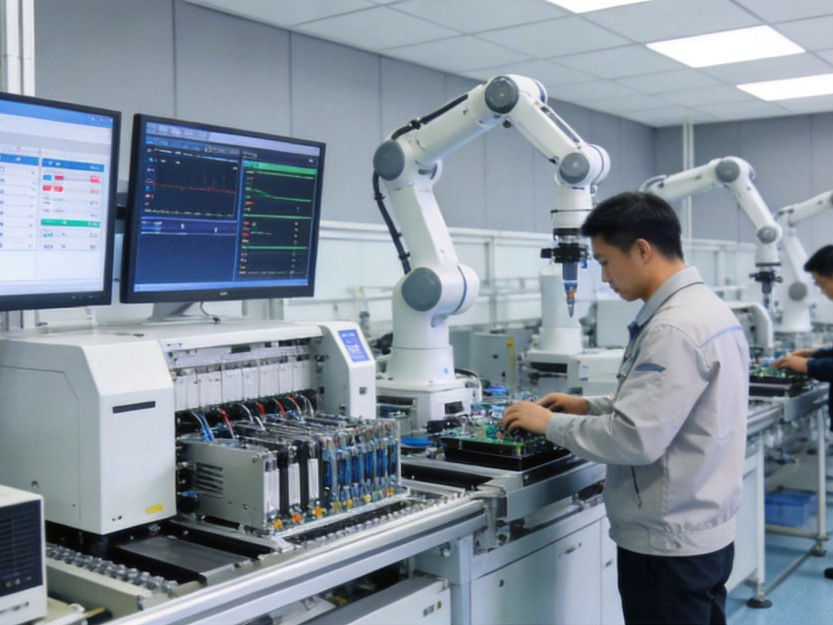
In the field of industrial automation, fiber optic connectors are similarly indispensable. With the advancement of Industry 4.0, a wide range of devices require high-speed data exchange via optical fibers to enable smart manufacturing. This not only improves production efficiency but also reduces operational costs. In this regard, fiber optic connectors effectively act as a key booster for the ongoing industrial revolution.
To sum up, the widespread application of fiber optic connectors across various fields highlights their fundamental importance and necessity. Whether in data centers, communication networks, smart homes, the healthcare industry, or industrial automation, fiber optic connectors provide quiet, reliable support for our daily lives and work. In the future, as technology continues to advance, fiber optic connectors will unlock even broader application prospects, making them a technology well worth anticipating.