Wenzhou AIOU Optical Communication Co., Ltd.



Leave Your Message
-
 Get Your Quote
-
 Email
Explore our top-tier optical interface boards and SFP transceivers tailored to meet the rigorous bandwidth standards of United States enterprises and municipal telecom infrastructures.
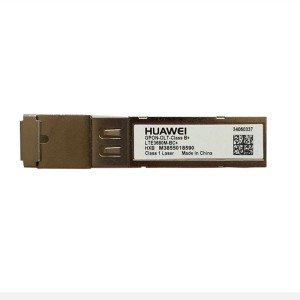
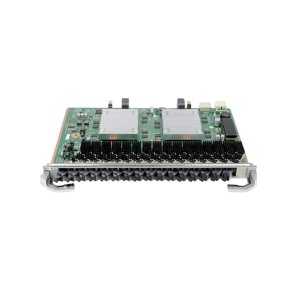
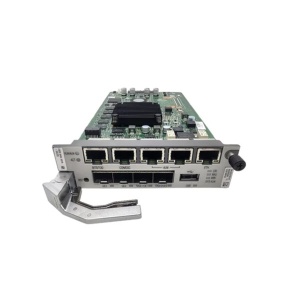
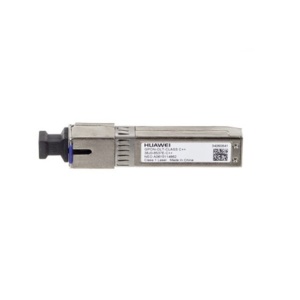
The telecommunications infrastructure in the United States is experiencing an unprecedented evolution. Driven by the massive rollouts of 5G cellular networks, the expansion of hyper-scale data centers, and federal funding initiatives like the Broadband Equity, Access, and Deployment (BEAD) program, the demand for reliable optical components has skyrocketed. Among these components, the 10G 10km SFP+ optical transceiver (often operating at 1310nm over Single-Mode Fiber) has emerged as the industry workhorse for mid-range transmission distances.
Across major metropolitan areas—from Silicon Valley, Austin, and Seattle to the financial hubs of New York and Chicago—enterprises are modernizing their local area networks (LANs) and metropolitan area networks (MANs). The 10G 10km SFP module offers the perfect sweet spot: it provides sufficient bandwidth to handle modern cloud workloads, high-definition video streaming, and IoT data aggregation while maintaining a transmission range of up to 6.2 miles (10 kilometers) without requiring expensive inline signal amplification. This makes it highly sought after by tier-2 and tier-3 ISPs, school districts, healthcare networks, and municipal utilities.
However, the acquisition costs of OEM-branded transceivers have historically constrained network expansion budgets. Consequently, the US market has seen a paradigm shift toward sourcing high-quality, third-party compatible SFP modules. Network architects now demand "cheap" yet robust transceivers that comply with Multi-Source Agreements (MSA), ensuring seamless interoperability with hardware from leading manufacturers like Cisco, Arista, Juniper, and Dell.
In the United States, the deployment of 10G 10km SFP modules is highly diversified. In the industrial sector, automated manufacturing facilities in the Midwest utilize these transceivers to connect remote distribution warehouses with central administrative offices, facilitating real-time inventory tracking and machine-to-machine (M2M) communication.
In smart city deployments, municipalities deploy 10G links to connect traffic monitoring systems, public safety cameras, and environmental sensors back to city hall data centers. The 10km range is ideal for covering suburban corridors and mid-sized cities without packet loss or high latency.
• Federal funding for rural broadband expansion (BEAD, RDOF).
• The rise of Edge Data Centers requiring low-latency 10G links.
• Demand for MSA-compliant third-party transceivers to optimize CapEx.
• Increasing adoption of green energy standards in data center cooling.
With the proliferation of latency-sensitive applications like autonomous driving and real-time financial trading, data storage and processing are moving closer to the end-user. Edge data centers situated around major logistics hubs rely on 10G 10km transceivers to interconnect facilities, creating localized, high-availability clouds. The 1310nm single-mode configuration is particularly favored here due to its low attenuation and dispersion characteristics over these intermediate distances.
As we look toward the next decade, several key trends are shaping the optical transceiver market in the United States:
US enterprises are increasingly adopting open networking architectures, which decouple hardware from software. This shift has broken the monopoly of legacy network vendors, allowing companies to pair white-box switches with cost-effective, third-party SFP+ modules. This open ecosystem dramatically reduces operational costs while offering greater flexibility in network design.
Power consumption is a major concern for modern data centers. Newer generations of 10G SFP+ modules are engineered to consume less than 1.0W of power. Lower power consumption directly translates to reduced heat generation, lowering the cooling costs of dense network racks—a critical consideration for facilities striving to meet LEED certification and sustainability goals in the US.
While 100G, 400G, and even 800G technologies are dominating the core networks of hyper-scale data centers (such as those operated by AWS, Google, and Meta), 10G remains the standard for access networks, enterprise LANs, and industrial campuses. The maturity of 10G technology makes it highly reliable and extremely cost-effective, ensuring its continued dominance in local distribution networks for years to come.
When sourcing SFP+ transceivers for the US market, it is essential to understand the technical parameters that guarantee compatibility and longevity. Below are the key specifications that network engineers prioritize:
Established in 2006, Wenzhou AIOU Optical Communication Co., Ltd. is a professional high-tech enterprise dedicated to the full industrial chain of optical network access solutions, covering research and development, manufacturing, sales, and after-sales service. We focus on delivering cutting-edge passive optical network (PON) products, including EPON, GPON, and XPON series, which are carefully tailored to meet the diverse needs of global customers in different regions and industries. With a firm commitment to independent innovation, we have built a strong R&D team composed of senior engineers with years of industry experience, holding multiple core technology patents and forming a comprehensive industrial chain, thus effectively serving various sectors such as operator networks, government and enterprise information systems, smart parks, and home broadband access.
Our complete product line covers OLT (Optical Line Terminal), ONU (Optical Network Unit), high-performance optical modules, and network switching equipment, supporting access rates ranging from 10/100M to 10G. These solutions are characterized by high performance, stable reliability, low latency, and easy deployment, perfectly aligning with customers’ demands for secure, stable, and high-speed communication networks. All our products have passed strict CE certification, as well as other international quality certifications, and are exported to more than 20 countries and regions across South America, Africa, Eastern Europe, Southeast Asia, and the Middle East, winning wide recognition from global partners for their superior quality and cost-effectiveness.
We operate a standardized 2,000-square-meter production zone equipped with advanced automated production and testing equipment, where we strictly adhere to ISO9001 quality management systems, CCC, and CE standards to ensure the consistency and reliability of each product. Our core mission is to exceed customer expectations by providing premium quality products, efficient and thoughtful after-sales services, and industry-leading technical support, continuously driving technological innovation and development in the global optical network infrastructure field.
As a premier manufacturer and exporter, Wenzhou AIOU Optical Communication Co., Ltd. is uniquely positioned to address the demand for high-quality, cost-effective optical modules in the United States market. While our legacy lies in serving diverse regions across South America, Eastern Europe, and the Middle East, our technical capabilities align perfectly with the strict requirements of American network operators.
We understand that US customers require not only competitive pricing but also strict adherence to quality and compatibility standards. Our state-of-the-art manufacturing facility ensures that every SFP module undergoes rigorous testing before exportation. By maintaining a highly optimized supply chain, we are able to bypass the steep markups associated with traditional distribution channels, passing the savings directly to our American partners. Whether you are an ISP expanding broadband access in rural communities or a system integrator building enterprise networks, AIOU provides the reliability and cost-efficiency needed to succeed in today's competitive landscape.
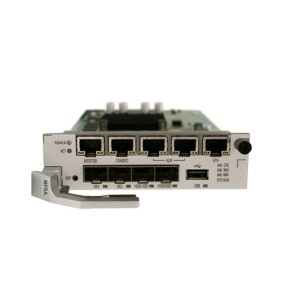
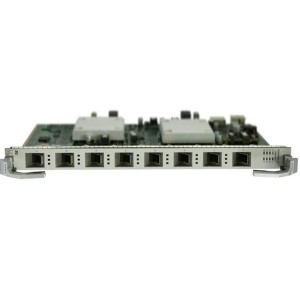
Browse our comprehensive selection of optical modules and OLT interface boards designed for seamless integration into enterprise, carrier, and FTTH networks across the United States.