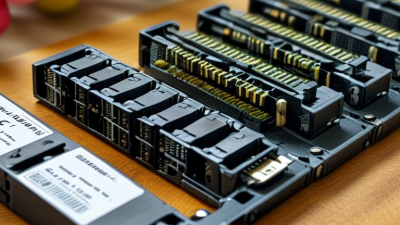
As the demand for faster, more reliable internet keeps climbing, choosing the right Fiber Transceiver has become pretty important for businesses around the globe. Come 2026, buyers are faced with so many options — it can honestly get a bit overwhelming. You’ve got big names like Cisco, Finisar, and Mellanox, each bringing their own perks for different kinds of uses.
Fiber transceivers help companies hit higher data speeds and keep signals clear. The tech is advancing so fast, but not every option is gonna fit every need. From SFPs to QSFPs, there’s a whole bunch of specs to get your head around, so understanding them is key.
Of course, it’s not always a walk in the park. Balancing cost versus performance can be tricky. Some products look perfect on paper but might not deliver in real-life situations. That’s why it’s super important for buyers to really figure out what they need and do their homework. With so many choices out there, finding the right Fiber Transceiver can really make a difference in how smoothly things run and in the company’s growth down the line.
Top Fiber Transceiver Options for Global Buyers 2026
In 2026, the demand for
Fiber Optic Transceivers continues to grow, driven by advancements in telecommunications and data centers. A recent report noted a projected compound annual growth rate (CAGR) of 10% in the fiber transceiver market. This growth reflects the increasing need for high-speed internet and reliable data transmission worldwide.
When selecting Fiber Optic Transceivers, consider various specifications, including compatibility, speed, and range. Opt for dual-rate options when flexibility is crucial. The use of advanced technologies like coherent optics is rising, providing better performance in long-haul applications. Research indicates that these technologies can reduce cost-per-bit while enhancing capacity.
Tip: Always verify the compatibility of your fiber optic transceiver with existing systems to ensure seamless integration.
Reliability is paramount. Reports show that up to 25% of issues in network performance are linked to subpar transceivers. Regularly evaluate your current solutions and remain open to innovations in the field. It’s essential to stay updated with industry trends and new technologies for optimal performance.
Tip: Invest in training for your team to better understand the capabilities and limitations of different Fiber Optic Transceivers. This knowledge can enhance decision-making and deployment strategies.
Understanding Fiber Transceiver Technology and Its Importance
Fiber transceivers play a critical role in modern communication systems. They support the transfer of data over long distances with minimal loss. Understanding the technology behind them is essential for anyone looking to enhance their network capabilities. The
Transceiver Optical Fiber
is designed to convert electrical signals into optical signals, and vice versa. This process enables high-speed data transmission.
The importance of these devices cannot be overstated. They facilitate connectivity, impacting industries from telecommunications to cloud computing. Each transceiver has specific use cases and standards, which can be confusing for buyers. Not every option is suitable for every application. Identifying the right transceiver optical fiber involves understanding bandwidth requirements and distance constraints.
However, it is essential to recognize the complexities involved. Not all networks are the same, and pre-existing infrastructure can limit choices. Buyers often overlook these factors, leading to mismatched equipment. This can hinder performance and result in higher costs. A careful evaluation of network needs is necessary to avoid costly mistakes. Understanding fiber transceiver technology is not just about specs; it's about matching solutions to real-world needs.
Key Features to Consider When Selecting Fiber Transceivers
When selecting fiber transceivers, several key features play a critical role. Transfer rates matter significantly. For most applications, a minimum of 10 Gbps is standard. Some advanced settings now demand up to 400 Gbps. Industry reports indicate a 20% increase in demand for higher bandwidth options recently. This trend emphasizes the need to assess future-proofing options when buying transceivers.
Compatibility with existing systems is another essential consideration. Ensuring that new transceivers work seamlessly with current network infrastructure can prevent costly upgrades. A survey conducted in early 2023 highlighted that 35% of network failures stem from compatibility issues. Moreover, operating temperatures should also be checked—many transceivers perform poorly outside the recommended range. Understanding thermal thresholds can save long-term operational headaches.
Lastly, the form factor of transceivers impacts installation and maintenance. Some models fit into compact spaces, while others may require more room. Accessibility for troubleshooting is vital. As reported by the Fiber Optic Association, roughly 25% of organizations cite maintenance challenges due to poorly chosen form factors. Attention to details in this area can enhance the longevity and functionality of your network.
Top Fiber Transceiver Options for Global Buyers 2026
| Model |
Interface Type |
Max Distance (km) |
Data Rate (Gbps) |
Wavelength (nm) |
Connector Type |
Operating Temperature (°C) |
| Model A |
SFP+ |
80 |
10 |
850 |
LC |
-40 to 85 |
| Model B |
SFP28 |
100 |
25 |
1310 |
SC |
0 to 70 |
| Model C |
QSFP+ |
150 |
40 |
1550 |
MPO |
-40 to 85 |
| Model D |
XFP |
120 |
10 |
1310 |
LC |
-5 to 70 |
| Model E |
CFP |
400 |
100 |
1550 |
LC |
0 to 70 |
Leading Global Manufacturers of Fiber Transceivers in 2026
Optical Fiber Transceivers continue to rise.
Leading global manufacturers are developing innovative solutions to meet this need.
The growth in data centers and telecommunication networks dramatically influences this market. Recent reports indicate that the optical transceiver market is expected to reach $21 billion by 2026, reflecting a CAGR of over 14%.
Companies specializing in Optical Fiber Transceiver technology are investing heavily in research and development. Their goal? To enhance data transmission rates and reduce latency.
As network requirements evolve, manufacturers face challenges in scaling production while maintaining quality. The emergence of new technologies, such as 400G and beyond, pushes these companies to adapt rapidly.
However, not all advancements translate into success. Some manufacturers struggle with supply chain disruptions. Others fall short of customer expectations regarding reliability and performance.
Understanding consumer needs remains critical. The optical transceiver landscape is ever-changing. Addressing these challenges will require a balance between innovation and practical solutions.
Market Trends Influencing Fiber Transceiver Development
The fiber transceiver market is evolving rapidly as global demand increases. According to a report by ResearchAndMarkets, the market is projected to grow at a CAGR of 15.2% from 2021 to 2026. This surge highlights the importance of high-speed data transmission in various industries. Data centers and telecommunications are seeing a significant uptick in fiber optic adoption. As bandwidth requirements rise, developing faster and more reliable transceivers becomes crucial.
A noteworthy trend is the shift towards cleaner technologies. The demand for energy-efficient transceivers is on the rise. These solutions not only address environmental concerns but also reduce operational costs. In fact, markets anticipate that eco-friendly transceivers will account for over 30% of the revenue by 2026. Companies are being pushed to innovate, but many still struggle to find the balance between efficiency and cost. As the technology matures, addressing this challenge will be essential for maintaining competitive edge.
Another factor shaping the fiber transceiver landscape is the growing importance of 5G networks. According to a report from IDC, 5G is expected to drive a significant increase in fiber deployment. The race to build robust infrastructure raises questions about the development pace of compatible transceivers. Companies must adapt to the increased complexity and demand for higher data rates. However, some may overlook the need for future-proofing technologies in their rush to market. This might lead to obsolescence and potential setbacks in a fast-changing environment.
Top Fiber Transceiver Options for Global Buyers 2026
Comparative Analysis of Cost-Effective Fiber Transceivers
As global demand for faster internet speeds grows, fiber transceivers become crucial. They facilitate high-speed data transmission over long distances. Selecting the right, cost-effective options requires understanding their functionalities and features.
When comparing Sfp Fiber Optic Transceivers, buyers should consider factors like power consumption and compatibility. Some may focus solely on price, missing hidden costs in maintenance or performance. It's essential to balance cost with reliability and efficiency. Not all affordable options deliver satisfactory longevity. Often, cheaper models lead to higher replacement costs. Researching user reviews and technical specifications can reveal practical insights.
Additionally, compatibility with existing infrastructure is vital. A budget-friendly transceiver may seem appealing, but it could create integration challenges. These issues might undermine network performance. Thus, reflecting on long-term needs becomes critical. A thorough analysis includes not only upfront costs but also future scalability.
Future Innovations in Fiber Transceiver Technology for Buyers
In 2026, fiber transceiver technology is poised for remarkable advancements. The increasing demand for high-speed internet and seamless connectivity propels innovations in this sector. According to industry reports, the global fiber optics market is expected to reach $8 billion by 2026, driven by advancements in transceiver technology. This growth suggests a shift toward smaller, more efficient devices.
Upcoming innovations focus on integrating AI capabilities in transceivers, enhancing their adaptability. AI can optimize data processing and improve the efficiency of information transmission. These enhancements may reduce latency and increase data rates significantly. However, the transition to these advanced systems may be challenging for some users. Existing infrastructures will require upgrades, and not all companies possess the resources for such investments.
Moreover, sustainability is becoming a critical factor. As companies push for greener technologies, the development of energy-efficient transceivers gains importance. Innovators are exploring low-power designs to promote environmental responsibility. Buyers must consider compatibility and performance trade-offs with these new, eco-friendly models. The path ahead is filled with potential and hurdles, demanding a careful evaluation of options for buyers.
FAQS
: Consider compatibility, speed, range, and your network’s specific needs.
Up to 25% of network issues stem from unreliable transceivers. Reliable performance is essential.
Fiber transceivers convert electrical signals to optical signals for efficient data transmission.
They enhance connectivity, affecting sectors like telecommunications and cloud computing significantly.
Yes, dual-rate options offer flexibility for different network needs and environments.
Training improves understanding of transceiver capabilities, aiding better decision-making and strategy development.
Buyers often overlook infrastructure limitations, leading to incompatible equipment and increased costs.
Always verify compatibility with existing systems before purchase.
Advancements like coherent optics enhance performance and reduce costs in long-haul applications.
Regular evaluation of existing solutions helps identify performance issues and informs potential upgrades.
Conclusion
The article "Top Fiber Transceiver Options for Global Buyers 2026" provides a comprehensive overview of fiber transceiver technology and its significance in modern communication networks. It explores the essential features that buyers should consider when selecting fiber transceivers, emphasizing the importance of compatibility, performance, and cost-efficiency. The article also examines leading global manufacturers shaping the market in 2026 and discusses current market trends that are affecting the development of fiber transceiver technology.
Additionally, a comparative analysis highlights cost-effective fiber transceiver options that meet diverse needs. Future innovations in fiber transceiver technology are also discussed, signaling ongoing advancements that promise to enhance network capabilities. This summary underscores the critical role of fiber transceivers in facilitating high-speed data transmission and connectivity in an increasingly digital world.



 Get Your Quote
 Email