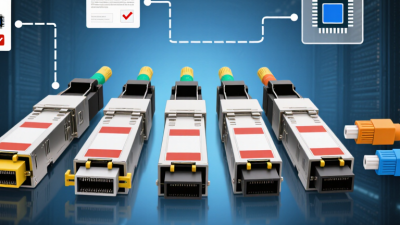
Picking the best Fiber Transceiver manufacturers in China isn't just about comparing price tags or flipping through product catalogs. The real story shows up in the details: steady 10G links, clean 100G signal transmission, accurate DOM readings, and gear that keeps running reliably inside packed data center racks. In this guide, we look at some well-known names—Innolight, Eoptolink, Hisense Broadband, Gigalight, and Source Photonics. Their strengths can vary quite a bit depending on the product family, where it's made, and who they're selling to.
Technical proof matters, too. We weigh things like optical reach, wavelength options, connector types, temperature ratings, power draw, and how well a module plays with major network equipment. We also dig into factory quality systems, testing procedures, delivery consistency, and after-sales support. Certifications such as ISO 9001, RoHS, CE, and relevant safety approvals can definitely add credibility. Still, a certificate by itself doesn't tell you much about how a part will hold up after years in the field.
And honestly? Field experience still matters most.
A dependable manufacturer should give you complete datasheets, clear labeling, traceable serial numbers, and practical compatibility guidance. Before placing a big order, sample testing is strongly recommended—really, don't skip it. A module that behaves beautifully in a lab can act very differently in a dusty cabinet or under constant heat. This comparison can't crown one universal winner, because network needs vary so much. Some conclusions may shift after newer product releases or independent testing, and that limitation is worth paying attention to. The goal here is a careful, evidence-based overview that helps buyers choose suitable Chinese Fiber Transceiver suppliers for telecom, enterprise networks, cloud platforms, and data center upgrades.

What Fiber Transceivers Are and Why Chinese Manufacturers Matter
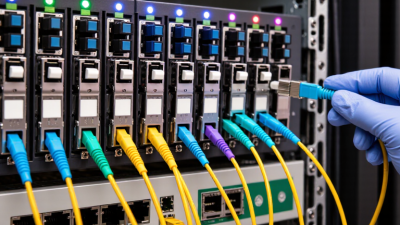
A Fiber Optic Transceiver converts electrical signals into optical signals for fast data transmission. It operates inside switches, servers, and telecom equipment. In a data center, a small module can connect racks several hundred meters apart. Longer links may extend across cities through single-mode fiber.
Chinese manufacturers matter because China has a mature electronics supply chain and strong production capacity. Many factories can support custom wavelengths, connector types, reach distances, and temperature ranges. Experienced suppliers also provide sampling, compatibility checks, and test reports before mass production. These steps reduce installation problems. However, quality varies between suppliers. Low prices can hide weak calibration, limited testing, or poor documentation. I have seen specifications look excellent on paper, yet performance changed under heat. That detail deserves careful review.
Tips: Ask for optical power, receiver sensitivity, operating temperature, and compatibility data. Request test samples before placing a large order. Check whether the factory performs aging tests and final inspections. Compare measured results, not only catalog claims. Keep one spare module for field replacement. Small planning errors can delay a whole network.
How to Evaluate Fiber Transceiver Manufacturers in China
Evaluating fiber transceiver manufacturers in China requires more than comparing prices. Inspect their production experience, engineering team, and quality records. A reliable supplier should explain its testing process clearly. Ask how each module is tested for temperature, signal stability, and long-term transmission. Request recent test reports, calibration records, and product traceability documents.
Compatibility deserves close attention. Confirm connector types, transmission distances, wavelengths, data rates, and operating temperatures before ordering samples. Experienced manufacturers usually provide detailed technical sheets and compatibility guidance. Test samples in your own switches and network conditions. Laboratory results may not reflect crowded racks, dusty sites, or unstable power. Real deployment can be less forgiving.
Look for controlled production, incoming material checks, and final inspection procedures. Ask about failure analysis when a sample does not pass. The response matters. Vague answers are warning signs. Review delivery history, spare-part policies, warranty terms, and technical support response times. An on-site or remote factory audit can reveal practical details, such as labeling accuracy and storage conditions. Still, no audit proves everything. Keep records, compare evidence, and leave room for a second evaluation after several shipments. Reliability grows through repeated performance, not polished promises.
Leading Chinese Manufacturers by Product Range and Expertise
Chinese optical transceiver manufacturers now cover a wide product range. Common options include 10G, 25G, 100G, 400G, and emerging 800G modules. Many factories also produce CWDM, DWDM, AOC, and DAC solutions. This range supports telecom networks, cloud data centers, industrial links, and campus systems. The Transceiver Optical Fiber market is becoming more specialized.
LightCounting’s 2024 market analysis estimated global optical transceiver revenue at roughly US$12 billion in 2023. It also identified artificial intelligence data centers as a major demand driver. Chinese manufacturers respond with high-density modules, short delivery cycles, and customized firmware. Experienced suppliers usually maintain temperature testing, optical power checks, and interoperability labs. These details matter when a module runs inside a crowded rack.
Product breadth alone is not enough.
Buyers should review insertion loss, receiver sensitivity, operating temperature, and actual test records. Omdia’s data-center research continues to show strong movement toward higher-speed connectivity. That trend increases pressure on quality control. The weak point is consistency. Some manufacturers present impressive catalogs, yet sample performance may vary between batches. A practical evaluation should compare three samples, inspect calibration records, and request field references. Capability needs evidence.
Fiber Transceiver Technologies and Industry Standards to Compare
Comparing an Optical Fiber Transceiver requires more than checking speed and price. IEEE 802.3 standards define Ethernet performance, while SFF-8472 and CMIS guide monitoring and management functions. These details affect deployment stability. A 400G module may support digital diagnostics, but its host platform must read temperature, voltage, and laser bias correctly.
LightCounting’s 2024 optical transceiver market analysis identifies 400G and 800G modules as major growth areas in data-center networks. It also highlights stronger demand for power efficiency and higher-density connectivity. Therefore, buyers should compare watts per bit, not only nominal bandwidth. In testing, measure bit-error rate, optical budget, insertion loss, and temperature performance. A module reaching 2 kilometers in a clean lab may perform differently inside a crowded rack.
Tip: Request compliance records, test conditions, and calibration dates. Check whether the supplier follows IEEE 802.3, SFF, IEC, and applicable environmental requirements. Confirm interoperability with your actual switches and fiber type. Vendor datasheets can look precise, yet some omit receiver sensitivity or aging results. That is a weakness worth questioning. A perfect comparison is impossible because network loads, airflow, and firmware behavior vary. Still, a transparent test report is usually more valuable than a polished specification sheet.
Quality Control, Compatibility, and Certification Considerations
Choosing the best fiber transceiver manufacturers in China requires more than comparing prices. Factory experience appears in small details, such as clean test benches, labeled components, and traceable production records. During supplier visits, ask how each Sfp Fiber Optic Transceiver is tested before shipment. A serious manufacturer should provide test results for optical power, receiver sensitivity, temperature, and transmission distance.
Compatibility needs practical verification. Request samples for your switches, routers, and existing fiber links. Check wavelength, connector type, data rate, reach, and digital diagnostic monitoring. A transceiver may fit physically but still fail after installation. That mistake is common. Testing across different equipment is essential. Ask whether the supplier maintains firmware or coding support for changing network platforms. Some factories offer broad compatibility claims, but their written test coverage may be limited.
Certification documents should match the actual product and manufacturing site. Review declarations, safety reports, electromagnetic compatibility evidence, and quality-management records. Confirm model numbers carefully. One missing letter can create confusion during audits or customs checks. Reliable suppliers retain batch numbers and calibration records for years. Still, certificates alone cannot prove stable field performance. I would inspect sample consistency and request accelerated temperature testing. Even experienced buyers sometimes accept polished documents too quickly. That deserves a second review. Clear warranty terms, failure analysis procedures, and responsive technical communication also reveal a manufacturer’s real reliability.
Pricing, Customization, and Global Supply Capabilities
Choosing a fiber transceiver manufacturer in China requires more than comparing the lowest quotation. Pricing usually depends on fiber type, transmission distance, wavelength, housing, coding, and order volume. A 10G module for a short data center link may cost far less than a long-distance industrial version. Ask for a line-item quotation.
Request samples before placing a large order. Check optical power, receiver sensitivity, temperature performance, and compatibility with your equipment. Experienced manufacturers can provide testing records, product drawings, and clear warranty terms. Still, documents are not proof of every shipment’s quality. Independent sampling remains sensible.
Customization can include EEPROM coding, labels, heatsinks, package design, and connector options. Small changes may require new tooling or firmware validation. Confirm minimum order quantities and sample fees early. Global supply capability also matters. Reliable suppliers should explain production capacity, reserve stock, export packaging, and delivery routes. A practical supplier can support mixed orders, not only full cartons of one model.
Lead times often change during component shortages. Keep a written schedule with production, testing, and shipping milestones. Some suppliers promise flexibility too quickly. That deserves careful review. Compare their monthly output with your forecast, not just their sales presentation. Payment terms, inspection procedures, and after-sales response should be agreed before production begins. A slightly higher price may reduce replacement costs, customs delays, and network downtime. The cheapest quote is not always economical. Forecasts can be wrong. Build a small safety stock.
Best Fiber Transceiver Manufacturers in China: Pricing by Product Class
Indicative China-sourced unit-price benchmarks in USD, based on common market configurations and low-to-medium volume purchasing. Prices vary according to wavelength, transmission distance, temperature grade, DOM/DDM support, coding, packaging, testing, and customized firmware. Higher-speed modules generally require more advanced optics, DSP technology, and validation, resulting in higher prices and longer customization cycles.
Reference configuration: commercial-temperature modules, standard optical interfaces, single-unit pricing estimates; volume orders and OEM customization may reduce or increase the final quotation.
How to Choose the Best Chinese Fiber Transceiver Manufacturer
Choosing the best Chinese fiber transceiver manufacturer requires more than comparing unit prices. LightCounting’s 2024 market outlook identifies AI and data-center upgrades as major drivers of optical transceiver demand. This growth increases pressure on suppliers to deliver stable 100G, 400G, and 800G products. Ask for measured insertion loss, return loss, power consumption, and bit-error-rate results. Marketing charts are not enough.
A reliable manufacturer should provide traceable component records, controlled assembly, and temperature testing. Request samples from different production batches. Check whether the modules work with your switches, fiber types, and operating temperatures. The manufacturer should explain coding, firmware, interoperability, and failure handling clearly. According to Dell’Oro Group’s data-center infrastructure research, cloud and AI investment continues expanding, making supply continuity and rapid technical support important purchasing factors.
I also examine the factory process personally when possible. Clean workstations, calibrated test equipment, and labeled aging racks reveal more than a polished website. ISO 9001 certification helps, but it does not replace independent test records. Verify RoHS and regional conformity documents for your market. Ask about warranty terms, replacement timing, and optical performance after extended use. Cheap samples can perform well. Long-term consistency is harder. One weakness remains easy to miss: some suppliers outsource critical testing without saying so. That question should be asked directly.
EPFD Rigid PCB Boards: High-Reliability Solutions for Fiber Optic and Telecom Networking Equipment
EPFD Rigid PCB Boards: High-Reliability Solutions for Fiber Optic and Telecom Networking Equipment
The rapid expansion of digital connectivity is increasing demand for dependable hardware in fiber optic and telecom networking systems. According to *Facts and Figures 2023* from the International Telecommunication Union, approximately 5.4 billion people were online worldwide, while around 2.6 billion remained offline. This continuing growth places higher performance expectations on core communication equipment, where stable signal transmission and long service life are essential. EPFD rigid PCB boards are engineered for these demanding applications, providing a durable platform for optical modules, network interfaces, switching units, and transmission equipment.
Manufactured with premium FR4 materials and advanced PCB processing technology, EPFD boards combine reliable mechanical strength with consistent electrical conductivity. Their rigid construction supports accurate component placement, efficient heat management, and reduced signal loss across densely configured circuits. The OECD Broadband Portal reported that fiber accounted for roughly 42% of fixed broadband subscriptions in member economies in late 2023, highlighting the need for robust boards throughout increasingly fiber-centered infrastructure. With controlled fabrication, dependable insulation performance, and suitability for continuous operation, EPFD rigid PCB boards help telecom equipment maintain stable connectivity in data centers, access networks, and outdoor communication systems.
FAQS
Check Ethernet performance standards and management specifications. Confirm monitoring support for temperature, voltage, and laser bias. Also review optical safety and environmental requirements. Standards alone are not enough.
Higher speeds can increase rack power and cooling demands. Compare watts per bit, not bandwidth alone. A low-power module may reduce long-term operating costs. The difference appears across hundreds of ports.
Request bit-error rate, optical budget, insertion loss, and temperature results. Ask for receiver sensitivity and return-loss data. Confirm test conditions and calibration dates. A polished chart proves little.
Treat the distance as a test result, not a guarantee. A two-kilometer laboratory result may change inside a crowded rack. Airflow, fiber quality, connectors, and network load affect performance. Real deployment testing matters.
Inspect component records, assembly controls, and aging procedures. Look for calibrated equipment and clearly labeled test racks. Samples from several production batches reveal consistency. One sample is weak evidence.
Confirm compatibility with your switches, fiber type, firmware, and operating temperature. Check coding and interoperability details. Verify that the host platform can read diagnostics correctly. Compatibility can fail quietly.
Certifications support quality control, but they do not replace test records. Request conformity documents for your target market. Ask whether critical testing occurs internally or externally. That detail is easy to miss.
Review warranty coverage, replacement timing, supply continuity, and technical support. Ask how failures are analyzed and reported. Check optical performance after extended use. Cheap samples can mislead.
Conclusion
China has become an important source of fiber optic networking equipment, offering a wide range of Fiber Transceiver solutions for data centers, telecommunications, enterprise networks, and industrial applications. This article explains what fiber transceivers are, why Chinese manufacturers matter, and how buyers can evaluate suppliers based on product range, technical expertise, production capacity, engineering support, and experience with international markets. It also highlights key technologies and standards, including different transmission speeds, fiber types, operating distances, connector options, and network compatibility.
The guide further examines quality control, testing procedures, certifications, traceability, customization services, pricing structures, delivery reliability, and global supply capabilities. By comparing these factors carefully, purchasers can identify manufacturers that provide stable performance, dependable compatibility, flexible product development, and consistent long-term support. The best choice should balance technical capability, verified quality, communication efficiency, total cost, and the supplier’s ability to meet specific project requirements.



 Get Your Quote
 Email