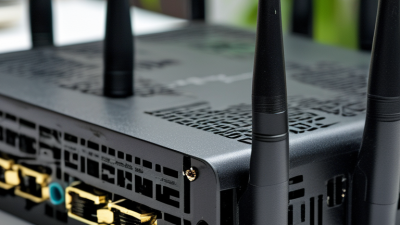
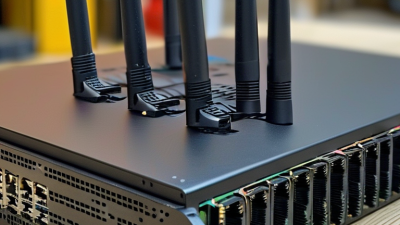
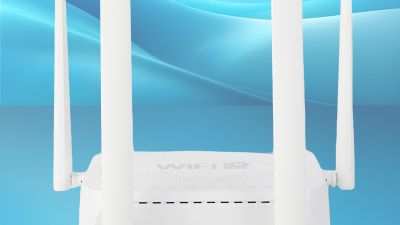
China has really positioned itself as a key player when it comes to sourcing fiber access equipment, including the popular Onu Wifi Routers. These days, global buyers aren’t just after the lowest prices—they want reliable firmware, proven optical performance, and solid after-sales support that they can count on. It’s a totally different game now.
By the way, did you know that the International Telecommunication Union reported there were around 5.5 billion internet users in 2024? That really puts into perspective how crucial good home connectivity has become. On top of that, the Dell’Oro Group has been highlighting ongoing investments in PON infrastructure, driven by the push for gigabit broadband and expanding fiber networks. All these trends open up big opportunities for Chinese manufacturers—especially those with strong engineering capabilities. But it’s also a quick way to spot the weaker suppliers.
Jeff Heynen, who’s a Vice President at Dell’Oro, summed it up nicely when he said, “PON is still the most cost-effective way to bring gigabit broadband to the masses.” That’s a major reason why we’re seeing so much demand for integrated Wifi Router Onu devices. An ideal model should support Wi-Fi 6 or Wi-Fi 7, operate on dual bands, automatically detect optical parameters, and be manageable remotely. Plus, it needs to clear tests for interoperability, temperature resilience, and long-term stability.
When buyers are checking out suppliers, they should really dig into details like optical budgets, chipset brands, software update policies, and production history. A fancy product sample only tells part of the story. A quick 48-hour test? Not nearly enough. And be cautious—some suppliers still claim their lab results match real-world performance, but that’s not always the case. So, it pays to be thorough.
Big names like Huawei, ZTE, and FiberHome have built up extensive telecom experience globally. But don’t overlook smaller factories—they can often offer flexible OEM and private-label options, too. The secret is in their documented processes, traceable components, and transparent communication. The truth is, the best Chinese supplier isn’t always the cheapest brand—it’s the one that can reliably prove their performance over and over again, shipment after shipment.
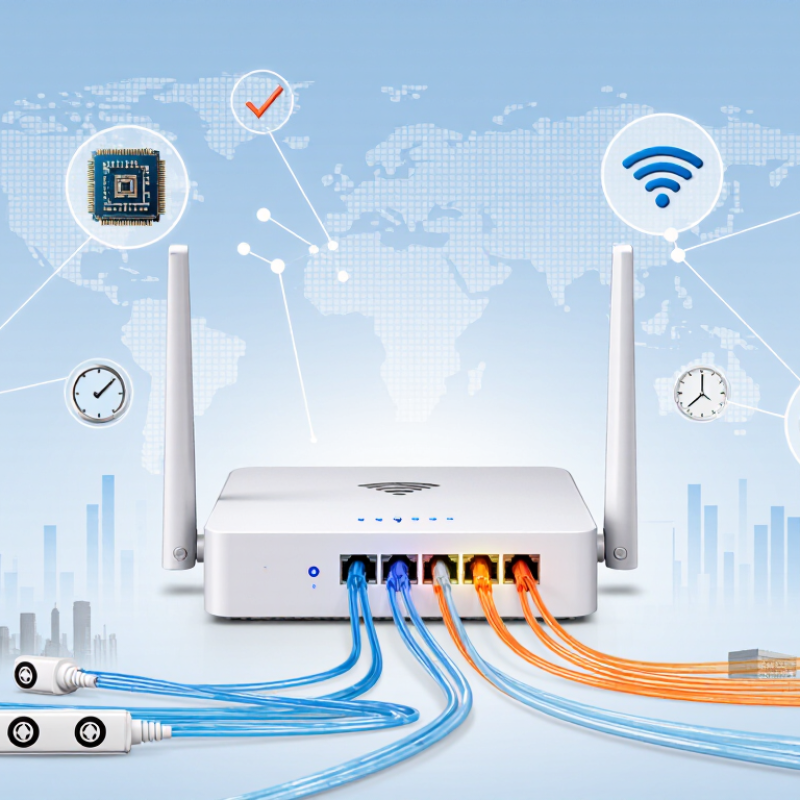
Define ONU WiFi Router Types: GPON, EPON, XG-PON, and XGS-PON
China Best ONU WiFi Router Supplier for Global Buyers?
A Wifi Onu Router combines optical network access with wireless distribution inside one device. GPON remains common for residential deployments because it offers mature equipment, broad compatibility, and efficient shared bandwidth. EPON uses Ethernet-based transport and often simplifies integration with existing network systems. The choice is not only about speed. Fiber distance, splitter ratios, optical power, and local operator requirements can change the result.
XG-PON provides higher downstream capacity than GPON and usually suits growing households, offices, and dense access networks. XGS-PON supports symmetrical high-speed transmission, which benefits cloud work, video production, and frequent uploads. However, a higher specification is not automatically better. Real performance depends on the OLT, fiber design, WiFi generation, processor load, and firmware stability. In field testing, a fast port can still feel slow when many users share a weak wireless channel.
Tips: Ask suppliers for interoperability records, optical power ranges, VLAN support, and remote management options. Test the router with the intended OLT before bulk purchasing. Check heat levels after several hours of traffic. Also review firmware update procedures and failure-replacement terms. Some product sheets look impressive, but practical testing may reveal limitations.
China Best ONU WiFi Router Supplier for Global Buyers? — ONU WiFi Router Types
The chart compares standardized nominal line rates for GPON, EPON, XG-PON, and XGS-PON. Actual user throughput depends on optical budgets, network configuration, protocol overhead, WiFi capability, and subscriber sharing. XGS-PON provides symmetrical 10 Gbps-class downstream and upstream capacity, while XG-PON is asymmetrical.
Compare Fiber Standards: GPON at 2.488/1.244 Gbit/s vs XGS-PON at 10 Gbit/s
For global buyers, an Onu Wifi Router should be selected by fiber standard, not appearance alone. GPON provides 2.488 Gbit/s downstream and 1.244 Gbit/s upstream. These rates suit many homes, small offices, and moderate video traffic. However, bandwidth is shared across users on the same passive optical network. Evening congestion can reduce the speed shown at the customer’s router.
XGS-PON reaches 10 Gbit/s downstream and upstream.
Its symmetrical capacity supports cloud backups, business applications, high-resolution streaming, and dense connected homes. The optical interface is only one part of the design. Check the router’s Ethernet ports, wireless capacity, processor, memory, and heat control. A 10 Gbit/s fiber port cannot deliver its value through a limited local interface. Small details matter.
During deployment checks, technicians should compare optical budgets, split ratios, latency, and real throughput. A speed test alone can mislead. Cabling, wireless interference, and subscriber sharing often explain disappointing results. GPON may be the more practical choice where service plans remain below one gigabit. XGS-PON offers room for growth, but it raises equipment and installation costs. I have seen planned upgrades fail because compatibility was assumed, not tested. Confirm standards, management functions, firmware support, and supplier documentation before placing an order. Mistakes happen. Reliable testing reduces them.
Evaluate Wi-Fi Performance: Wi-Fi 6 Offers Up to 9.6 Gbit/s Theoretical Speed
For global buyers evaluating a China-based ONU WiFi router supplier, Wi-Fi 6 performance deserves careful attention. The advertised 9.6 Gbit/s speed is theoretical. It combines multiple bands under ideal laboratory conditions. A single household device will not reach that figure.
In practical testing, performance depends on channel width, client capability, fiber service, and network congestion. OFDMA can divide wireless resources more efficiently among phones, cameras, and computers. MU-MIMO helps the router communicate with several compatible devices simultaneously. This feels valuable in a busy apartment. However, older devices may gain little from these features. Walls matter too. A router placed inside a cabinet can lose noticeable signal strength.
Reliable evaluation requires more than reading the package.
I check throughput at different distances, latency during video calls, and stability with many connected devices. Ethernet testing should confirm the optical network interface before judging Wi-Fi results. Heat also deserves attention. Poor ventilation may reduce long-session performance. Supplier documentation should state supported Wi-Fi standards, optical interface details, encryption options, firmware update procedures, and warranty terms. Numbers can mislead. Even well-designed equipment may perform unevenly in concrete buildings or crowded wireless environments. Buyers should request region-appropriate power specifications and conduct sample testing before placing large orders.
Verify OLT Compatibility, TR-069 Support, IPv6, and Regional Certifications
China Best ONU WiFi Router Supplier for Global Buyers?
Global buyers should test OLT compatibility before comparing prices. The ONU must support the operator’s required standards, such as ITU-T G.984, G.988, or XGS-PON profiles. Ask for interoperability records, not only a software datasheet. A live test with the target OLT can reveal registration failures, unstable VLAN mapping, or weak optical performance. Small details matter. Omdia’s broadband market research shows continued migration toward fiber access, increasing pressure on suppliers to support mixed PON environments. However, compatibility claims are sometimes too optimistic. Request firmware versions, test logs, and optical budget results.
TR-069 support helps operators manage WiFi settings, diagnostics, and firmware remotely. Confirm the supported data model and ACS functions. IPv6 should include dual-stack operation, prefix delegation, firewall controls, and stable customer-premises routing. APNIC Labs’ IPv6 measurements show adoption has become substantial worldwide, but regional performance still differs sharply. Certification also requires local attention. Check radio approvals, electrical safety documents, cybersecurity requirements, and packaging languages for each destination. ITU’s Facts and Figures 2024 reports that billions of people now use the internet, making regional compliance a practical supply-chain issue. A supplier may provide a certificate, yet the certificate could cover another hardware revision. Verify the exact model, antenna version, and manufacturing site.
Assess Supplier Quality Through ISO 9001, Testing, Firmware, and Warranty Data
China Best ONU WiFi Router Supplier for Global Buyers?
Choosing a supplier requires more than comparing catalog prices. For a Wifi Router Gpon Onu, buyers should request a current ISO 9001 certificate and verify its scope. The certificate should cover design, production, and quality control. Ask for batch records, not only polished presentation files. A reliable supplier can explain how optical power, WiFi throughput, heat, and restart recovery are tested. Test reports should include dates, equipment models, sample quantities, and failed results.
Firmware quality deserves equal attention. Request release notes, vulnerability response procedures, and a clear update policy. During evaluation, test several units with different optical conditions. Check registration time, wireless stability, web interface behavior, and recovery after power loss. Small details matter. A router that reconnects slowly can create costly support calls.
Warranty data reveals operational maturity. Ask for return rates, common failure causes, replacement timing, and repair records from recent shipments. Suppliers may hesitate to share everything, but vague answers need careful review. My own assessment process is not perfect; laboratory results cannot represent every home or network. Field samples can behave differently after months of heat and dust. That is why buyers should combine factory audits, independent testing, firmware trials, and written warranty terms before making a large purchase.
Compare MOQ, OEM/ODM Capacity, Lead Times, Pricing, and Global Logistics
China remains a practical sourcing base for Router Onu products, but the cheapest quotation rarely tells the full story. The ITU reported 5.4 billion people online in 2023, increasing demand for stable fiber access equipment. Buyers should compare MOQ beside certification, firmware control, and after-sales testing. A supplier offering 100 units may charge more per device, while a 1,000-unit order can reduce housing and packaging costs.
OEM and ODM capacity need physical verification. Ask for a sample with your logo, customized web interface, optical-power readings, and bilingual labels. Lead times should separate engineering, pilot production, and mass production. A realistic schedule may include seven days for sampling, two to four weeks for software changes, and three to six weeks for production. Sometimes, estimates are too optimistic. I would request a written buffer.
Pricing also depends on memory, Wi-Fi generation, PON standard, accessories, and testing depth. The World Bank’s 2023 Logistics Performance Index assesses customs, infrastructure, tracking, and timeliness, all relevant to international delivery. Compare factory pickup, sea freight, air freight, insurance, and destination duties separately. For example, a pallet leaving Shenzhen may need moisture protection, carton drop testing, and barcode checks before export. Weak packaging can erase a small unit-price saving. Check defect-rate records, replacement terms, and spare-unit percentages before signing.
Select China’s Best ONU WiFi Router Supplier Using a Weighted Scorecard
China Best ONU WiFi Router Supplier for Global Buyers?
Select China’s Best ONU WiFi Router Supplier Using a Weighted Scorecard
Choosing an ONU WiFi router supplier requires more than comparing catalog prices. I use a weighted scorecard to convert technical evidence into a practical buying decision. Reliability receives 25 points, interoperability 20, wireless performance 20, security 15, technical support 10, and commercial fit 10. The weights can change by project.
Ask each supplier for production samples, optical test records, firmware versions, and quality-control procedures. Test several units under real conditions. Check WiFi speed through two walls, connection stability during heavy traffic, optical receive power, VLAN behavior, and management compatibility. Paper specifications can look impressive. Field performance may disagree.
Security deserves direct questions. Request update policies, access-control details, vulnerability response procedures, and product compliance documents for each target market. Also examine factory capacity, defect handling, replacement timing, minimum order quantities, and packaging quality. A responsive engineer can prevent weeks of delay. That matters.
Do not trust one perfect sample. Run a small pilot.
Some scores will remain uncertain because suppliers may provide incomplete evidence. Mark those items as unverified instead of awarding full points. I once treated fast email replies as strong support evidence; that was too generous. A clear scorecard exposes these gaps, supports fair negotiations, and helps global buyers choose based on measurable risk rather than attractive promises.
Ai80-X6 XPON ONU: Key Features, Benefits, Compatibility, and Practical Applications
The Ai80-X6 XPON ONU is designed for modern FTTH networks that require flexible access, stable performance, and simple home management. Supporting both GPON and EPON dual-mode operation, it can adapt to different optical access infrastructures and reduce deployment limitations for service providers. According to the International Telecommunication Union’s *Facts and Figures 2023*, global fixed-broadband subscriptions reached approximately 18 per 100 inhabitants, reflecting continued demand for dependable high-speed connectivity. With wired Ethernet ports and dual-band Wi-Fi, the Ai80-X6 supports everyday browsing, online learning, cloud services, gaming, and high-definition video streaming across multiple devices.
As an integrated smart gateway, the Ai80-X6 combines broadband access, VoIP calling, wireless connectivity, and network management in one compact unit. Its dual-band wireless design helps distribute traffic more efficiently, while Ethernet connections provide stable links for desktop computers, smart televisions, security systems, and office equipment. In homes, it can serve as the central access device for connected appliances and entertainment systems; in SOHO environments, it supports small teams, digital phone services, and shared online applications. Industry broadband forecasts also continue to highlight fiber’s role in handling growing household traffic, particularly as video, cloud applications, and connected devices expand. Its dual-mode XPON compatibility makes it suitable for new FTTH installations, network upgrades, and mixed-access environments.
FAQS
No. It is a theoretical combined speed across multiple wireless bands. One phone will achieve much less. Walls, distance, congestion, and device limits reduce performance. The number still helps, but it can mislead.
OFDMA shares wireless resources among phones, cameras, and computers. MU-MIMO supports several compatible devices at once. These features help during crowded evening use. Older devices may benefit little.
Place it in an open, central location. Avoid cabinets, metal shelves, and thick concrete walls. A closed cabinet can noticeably weaken the signal. Small placement changes matter.
Test throughput at several distances. Check latency during video calls. Connect many devices at the same time. Also test Ethernet separately. Wireless results cannot confirm optical interface quality.
Poor ventilation may reduce performance during long sessions. Run continuous traffic for several hours. Touching the case is not a complete test. Temperature logging would be better.
Test the unit with the intended optical line terminal. Request interoperability records, firmware versions, and test logs. Check registration, VLAN mapping, and optical budget results. A datasheet alone is insufficient.
Confirm support for TR-069, the supported data model, and automatic configuration functions. Remote diagnostics and firmware updates should work reliably. Ask for a demonstration. Claims are sometimes too optimistic.
Confirm dual-stack operation, prefix delegation, firewall controls, and stable routing. Check radio approvals and electrical safety documents for each destination. Verify packaging languages and cybersecurity requirements. The certificate must match the exact model and hardware revision. A similar certificate is not enough.
Conclusion
Choosing the right Onu Wifi Router supplier in China requires more than comparing prices. Global buyers should first understand the differences between GPON, EPON, XG-PON, and XGS-PON, then match fiber capacity with network requirements. GPON typically provides 2.488 Gbit/s downstream and 1.244 Gbit/s upstream, while XGS-PON supports symmetrical speeds of up to 10 Gbit/s. Wi-Fi performance is also important, with Wi-Fi 6 offering theoretical speeds of up to 9.6 Gbit/s under suitable conditions.
Before placing an order, verify OLT compatibility, TR-069 management, IPv6 support, and required regional certifications. Supplier quality should be assessed through ISO 9001 records, product testing, firmware stability, warranty terms, and technical support. Buyers should also compare MOQ, OEM/ODM capabilities, lead times, pricing, packaging, and international logistics. A weighted scorecard can combine technical performance, reliability, service, and commercial value to identify the most suitable supplier for long-term global distribution.



 Get Your Quote
 Email